Why Hospitals Need Reliable Standby Diesel Generators
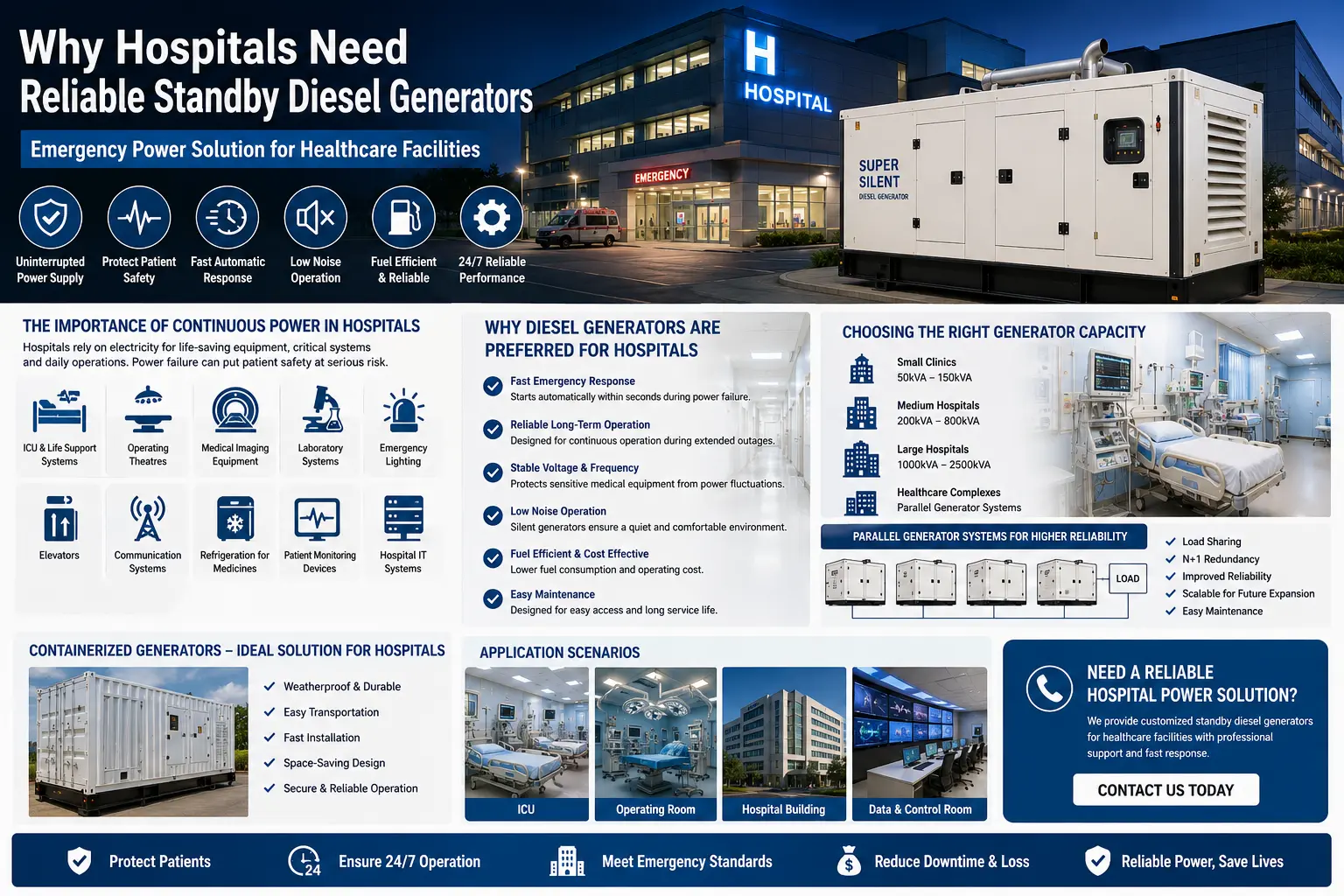
In modern healthcare facilities, uninterrupted power supply is not just important — it is critical. Hospitals rely on electricity for life-saving medical equipment, operating rooms, intensive care units, emergency lighting, communication systems, and patient monitoring devices. Even a short power interruption can lead to serious operational risks and threaten patient safety.
This is why reliable standby diesel generators have become an essential part of hospital infrastructure around the world.
The Importance of Continuous Power in Hospitals
Hospitals operate 24 hours a day and require stable electricity at all times. Unlike commercial buildings or factories, hospitals cannot tolerate power failures because many medical systems directly support patient care and emergency treatment.
Critical systems that depend on continuous power include:
- Intensive Care Units (ICU)
- Ventilators and life support systems
- Operating theaters
- Medical imaging equipment
- Laboratory systems
- Emergency lighting
- Elevators
- Communication systems
- Refrigeration for medicines and vaccines
During a power outage, a reliable hospital standby generator ensures that these systems continue operating without interruption.
Risks of Power Failure in Healthcare Facilities
Power outages in hospitals can create severe consequences. Even a few seconds of downtime may cause:
- Medical equipment shutdown
- Delayed emergency response
- Data loss in hospital systems
- Patient safety risks
- Surgical interruptions
- Security and communication failures
In critical healthcare environments, backup power is not optional — it is a mandatory safety requirement.
Why Diesel Generators Are the Preferred Choice for Hospitals
Diesel generators are widely used in hospitals because they offer excellent reliability, fast startup capability, and stable long-term performance.
Compared with other backup power systems, diesel generators provide several important advantages.
1. Fast Emergency Response
Hospital standby generators are designed to start automatically within seconds after utility power failure. This rapid response helps maintain uninterrupted operation of critical medical equipment.
Most hospital generators are equipped with an Automatic Transfer Switch (ATS), which automatically detects power outages and switches the hospital load to the standby generator.
2. Reliable Long-Term Operation
Hospitals may experience extended outages during storms, natural disasters, or grid failures. Diesel generators can operate continuously for long hours while maintaining stable power output.
Water-cooled diesel generators are especially suitable for healthcare facilities because they provide better heat management and reliable long-duration performance.
3. Stable Voltage and Frequency
Sensitive medical equipment requires stable voltage and frequency to function properly. High-quality standby diesel generators include advanced control systems and Automatic Voltage Regulation (AVR) to ensure power stability.
Stable power supply helps protect:
- MRI machines
- CT scanners
- Monitoring systems
- Laboratory equipment
- Computer servers
4. Low Noise Operation
Hospitals require a quiet environment for patients and medical staff. Super silent diesel generators are commonly used in healthcare facilities to reduce noise pollution and improve comfort.
Modern silent generators are designed with advanced soundproof enclosures and low-noise exhaust systems, making them ideal for urban hospitals and medical centers.
Choosing the Right Generator Capacity for Hospitals
Different healthcare facilities require different generator capacities depending on their size and operational requirements.
Typical recommendations include:
- Small clinics: 50kVA – 150kVA
- Medium hospitals: 200kVA – 800kVA
- Large hospitals and medical centers: 1000kVA – 2500kVA
- Multi-building healthcare complexes: Parallel generator systems
Proper load calculation is essential to ensure reliable backup power for all critical systems.
Why Parallel Generator Systems Are Important
Large hospitals often use parallel diesel generator systems for increased reliability and redundancy.
Benefits of parallel systems include:
- Load sharing
- Improved reliability
- Easier maintenance
- N+1 redundancy design
- Scalability for future expansion
Parallel systems help hospitals maintain continuous operation even if one generator requires maintenance or experiences a fault.
Containerized Diesel Generators for Healthcare Projects
Containerized diesel generators are becoming increasingly popular for hospitals because they provide:
- Better weather protection
- Easy transportation
- Faster installation
- Improved security
- Compact outdoor deployment
These solutions are especially useful for temporary hospitals, emergency medical centers, and remote healthcare facilities.
Conclusion
Reliable standby diesel generators play a critical role in modern healthcare infrastructure. Hospitals require uninterrupted power to protect patient safety, maintain medical operations, and ensure emergency readiness during power failures.
Choosing the right diesel generator solution — including proper capacity, silent operation, stable performance, and redundancy design — is essential for every healthcare facility.
If you are looking for a reliable hospital standby generator solution, contact us today for customized healthcare power systems and professional technical support.
Reliable Power Solutions for Mining Operations
How to Choose the Right Backup Generator for a Hotel