1000kW vs 1500kW Diesel Generator: Which Size Is Right for Your Project in 2026?
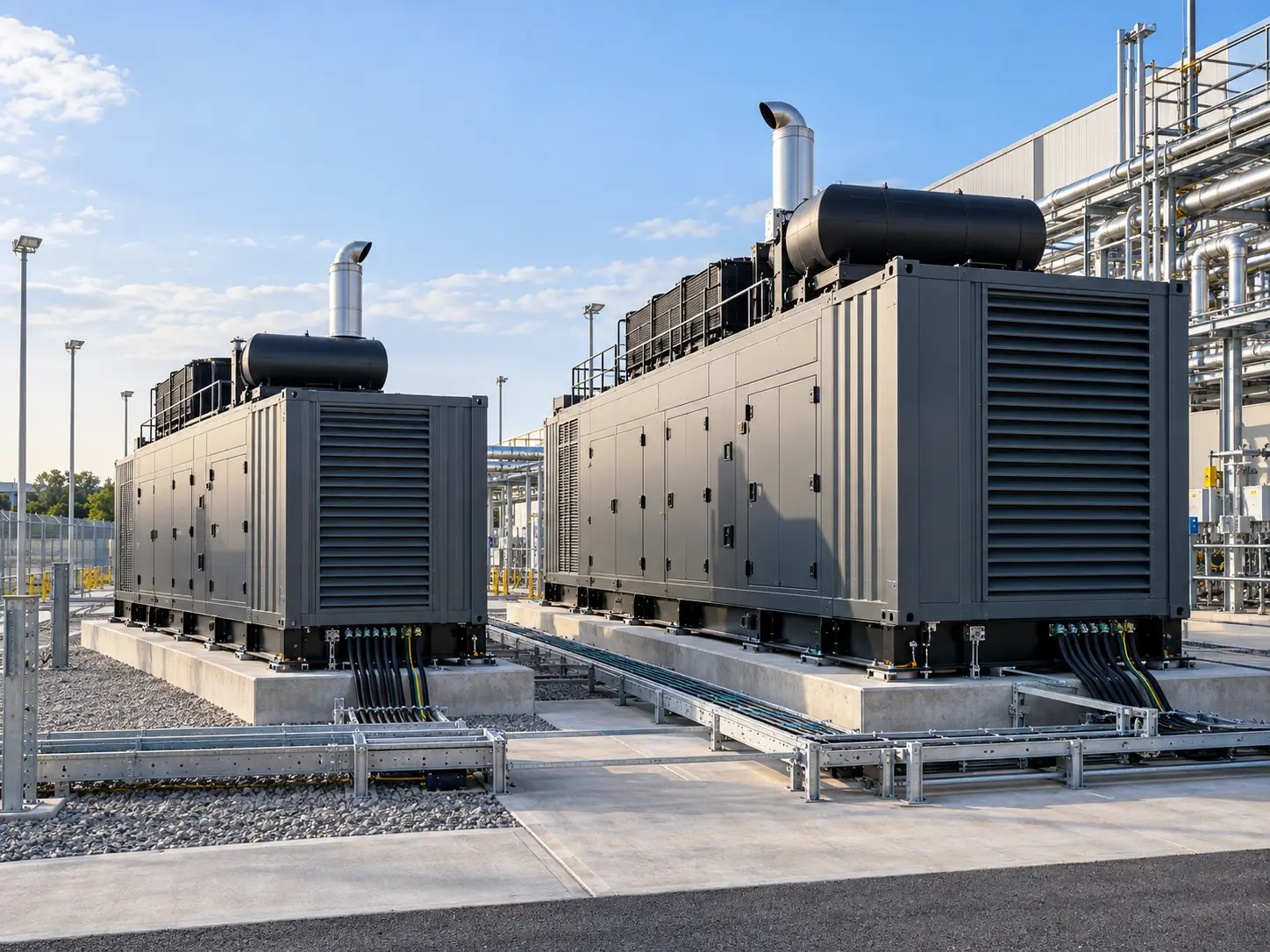
1000kW vs 1500kW Diesel Generator: Which Size Is Right for Your Project in 2026?
Published: October 25, 2026 | FORYOU POWER Technical Insights
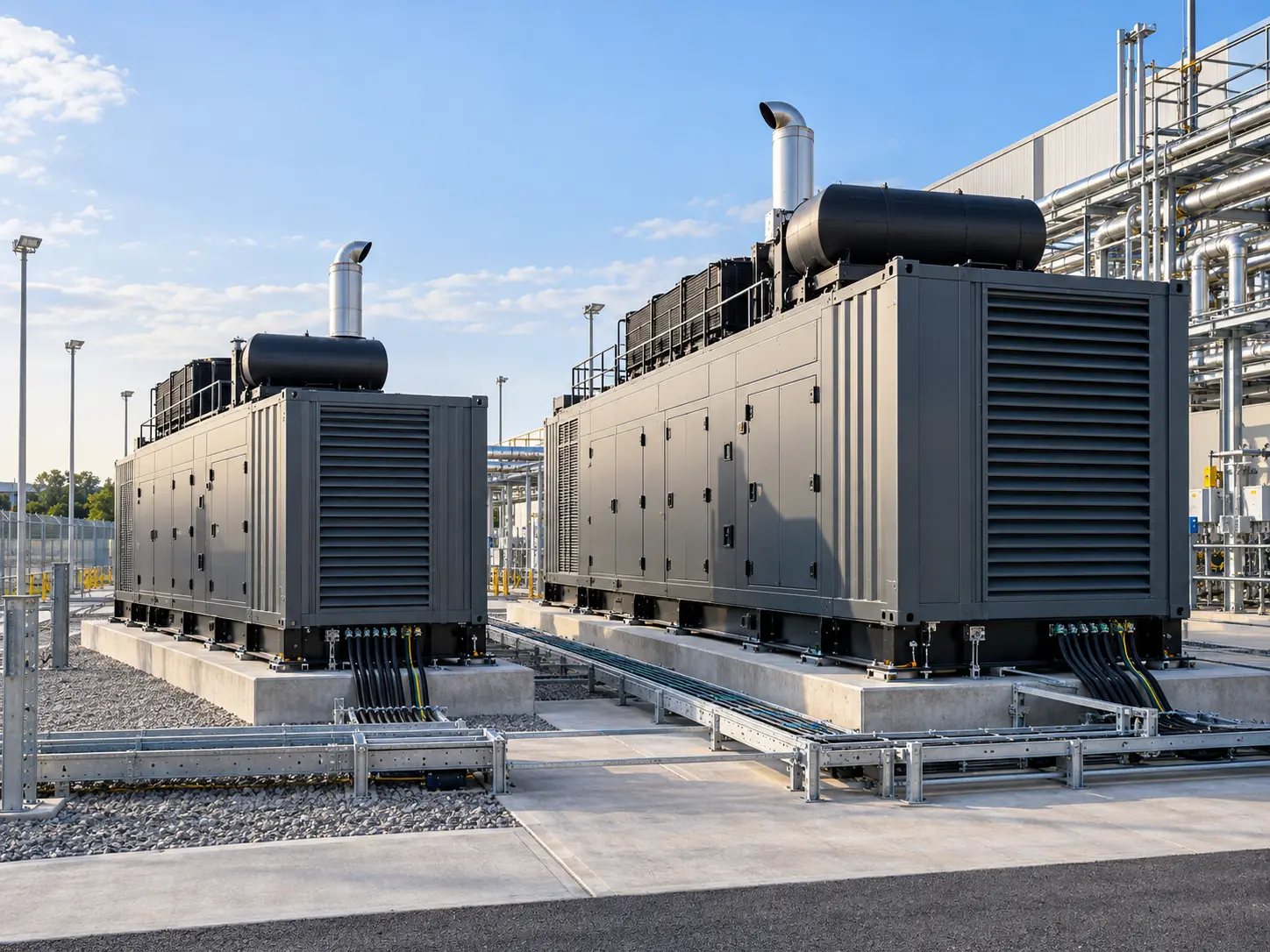
Choosing between a 1000kW and 1500kW diesel generator is an important decision for industrial power projects. The right capacity can help ensure reliable operation, accommodate changing electrical loads, and control long-term operating costs.
However, selecting a larger generator does not automatically mean better performance.
Oversized generators may operate inefficiently at low loads, while undersized generators can struggle with motor starting, sudden load changes, and future expansion.
For factories, mining operations, oil and gas facilities, and industrial infrastructure projects, accurate generator sizing is essential.
In this guide, FORYOU POWER compares 1000kW and 1500kW diesel generator systems, explains their main technical differences, and provides practical recommendations for international buyers.
1. Understanding the Difference Between 1000kW and 1500kW Diesel Generators
The most obvious difference is rated electrical output.
A 1500kW generator provides 50% more rated real-power capacity than a 1000kW generator when comparing the same rating category.
At a rated power factor of 0.8, the nominal ratings are:
| Specification | 1000kW Generator | 1500kW Generator |
|---|---|---|
| Rated real power | 1000kW | 1500kW |
| Apparent power at 0.8 PF | 1250kVA | 1875kVA |
| Relative output capacity | 100% | 150% |
| Typical project scale | Medium-to-large industrial loads | Larger industrial power requirements |
| Initial equipment cost | Generally lower | Generally higher |
| Fuel demand at rated output | Model-dependent | Model-dependent |
| Installation requirements | Model-dependent | Often greater for larger equipment |
The relationship between kW and kVA is:
kVA = kW ÷ Power Factor
Therefore:
-
1000kW ÷ 0.8 = 1250kVA
-
1500kW ÷ 0.8 = 1875kVA
These conversions assume a generator rated at 0.8 power factor.
Importantly, these capacity figures do not indicate whether the generator is rated for standby, prime, or continuous operation.
That difference must be checked before comparing products.
2. Standby and Prime Power: Why the Rating Matters More Than the Model Name
One of the biggest mistakes buyers make is assuming that all generators advertised as 1000kW or 1500kW can deliver that output for the same operating duration.
Generator manufacturers commonly specify different power ratings.
Standby Power
Standby-rated generators are intended for emergency electricity supply when the normal power source is unavailable.
Their operation is subject to the manufacturer's applicable limitations.
Prime Power
Prime-rated generators are designed for variable-load applications over extended operating periods, subject to the specified load-factor and operating requirements.
Continuous Power
Continuous-rated generators are intended for continuous operation at a defined load under specified conditions.
Example: FORYOU POWER Diesel Generator Ratings
| Generator Model | Standby Rating | Prime Rating |
|---|---|---|
| FY-1250MTU | 1000kW / 1250kVA | 900kW / 1125kVA |
| FY-1375MTU | 1100kW / 1375kVA | 1000kW / 1250kVA |
| FY-1875SME | 1500kW / 1875kVA | 1360kW / 1700kVA |
| FY-2063SME | 1650kW / 2062.5kVA | 1500kW / 1875kVA |
These examples demonstrate why the operating duty must be specified clearly.
For example, a project requiring 1500kW of prime-rated capacity should not automatically select the FY-1875SME simply because its standby rating is 1500kW.
Instead, the buyer should evaluate equipment with a verified prime rating of at least the required capacity, together with the project's average load, operating hours, and transient requirements.
Buyer recommendation: Always request both standby and prime specifications in your generator quotation.
3. How Much Electrical Load Can Each Generator Support?
The appropriate generator capacity depends on actual electrical demand rather than the total number of machines installed at a facility.
Consider three simplified industrial operating scenarios.
Scenario A: Factory with a Maximum Running Load of 700kW
Suppose a manufacturing facility has a maximum steady-state demand of approximately 700kW.
The operating load would represent:
-
70% of a 1000kW generator rating
-
Approximately 47% of a 1500kW generator rating
In this situation, a properly rated 1000kW generator may provide an appropriate solution.
However, the final selection must also consider motor starting, reserve requirements, and generator operating duty.
Scenario B: Industrial Facility with an 1100kW Operating Load
Now consider a facility requiring approximately 1100kW during normal operation.
A 1000kW generator cannot deliver this load within a 1000kW rated capacity.
A 1500kW prime-rated generator would operate at approximately 73% of its rated output at this load.
This could make a 1500kW-class generator an appropriate candidate, assuming the electrical design and equipment specifications meet the project's requirements.
A smaller or differently configured multi-generator system could also be evaluated.
Scenario C: Mining Operation with Future Expansion
A remote mining facility currently requires 800kW but expects electrical demand to increase to 1200kW as additional processing equipment is installed.
A 1000kW generator might meet the initial steady-state load if correctly rated, but it would not meet the planned 1200kW requirement as a single unit.
The project developer could consider:
-
Installing a suitably rated larger generator from the beginning
-
Using multiple generators with parallel operation
-
Designing the electrical infrastructure for future generator expansion
The right decision depends on the project schedule, capital budget, expected load profile, and required availability.
Key principle: Generator capacity should be selected based on current and forecast electrical demand—not capacity alone.
4. Why Buying an Oversized Diesel Generator Can Be a Mistake
Some buyers assume that purchasing the largest affordable generator is the safest strategy.
However, running a diesel engine for extended periods at a very low percentage of its rated capacity may create operating and maintenance problems.
Caterpillar's technical guidance notes that standby and prime diesel generators are generally designed to operate within appropriate loading ranges, commonly around 50–85% of nameplate capacity, depending on the application and rating.
Actual recommended loading must be confirmed for the specific engine and duty cycle.
Example: 600kW Operating Load
At a steady 600kW electrical demand:
| Generator Rating | Percentage of Rated Power |
|---|---|
| 1000kW | 60% |
| 1500kW | 40% |
The 1000kW generator operates at a higher percentage of its capacity.
Depending on the engine and operating requirements, this may provide a more suitable loading condition.
Extended low-load operation in certain diesel engines can contribute to incomplete combustion, carbon deposits, or wet stacking.
However, it would be incorrect to conclude that a 1500kW generator is always unsuitable at 40% load. Engine design, manufacturer instructions, and operating duration all matter.
Buying advice: Avoid selecting extra generating capacity without evaluating expected minimum and average loads.
5. Fuel Consumption: Is a 1000kW Generator More Economical?
Fuel consumption is a major consideration for industrial diesel generator projects, particularly where generators operate for many hours each day.
A larger generator commonly consumes more fuel at its full rated output, but that does not tell buyers which generator is more efficient at the same electrical load.
Fuel consumption depends on:
-
Engine model and combustion efficiency
-
Electrical output and load percentage
-
Generator duty rating
-
Ambient temperature and altitude
-
Maintenance condition
-
Fuel properties
The correct comparison uses manufacturer-provided fuel consumption data at equivalent operating outputs.
Example: Comparing Operation at 800kW
A 1000kW generator supplying 800kW operates at 80% of its rated power.
A 1500kW generator supplying the same 800kW operates at approximately 53% of its rated power.
The two generators should be compared using their fuel consumption at 800kW—not by comparing fuel consumption at 100% nameplate load.
Calculating Daily Fuel Costs
The basic calculation is:
Daily Fuel Cost = Fuel Consumption (L/hour) × Operating Hours × Diesel Price (per liter)
For long-term industrial projects, the financial comparison should include maintenance, spare parts, installation, and anticipated operating life.
FORYOU POWER recommends requesting model-specific fuel consumption tables at multiple loads before making a final purchasing decision.
6. Engine Selection: MTU, Mitsubishi and Other Industrial Options
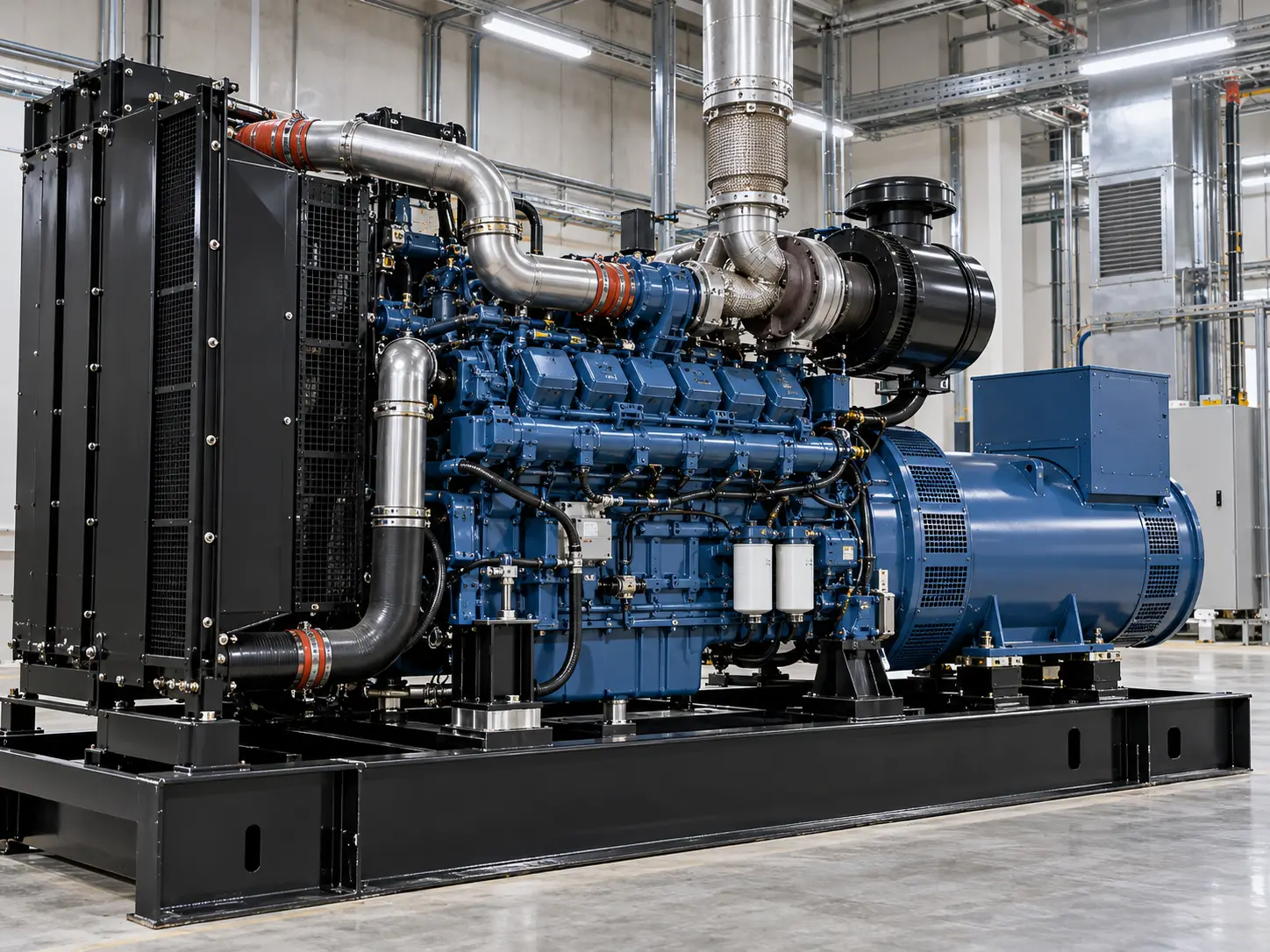
Engine selection affects generator performance, maintenance resources, installation requirements, and long-term service planning.
FORYOU POWER provides industrial diesel generator configurations with several established engine platforms, including MTU and Mitsubishi.
FORYOU POWER MTU Series
The MTU-powered range includes generator models with standby and prime ratings suitable for large industrial applications.
For example:
FY-1375MTU
-
Engine: MTU 12V4000G23RF
-
Standby Power: 1100kW
-
Prime Power: 1000kW
-
Suitable for evaluating 1000kW prime-power requirements
Explore: FORYOU POWER MTU Generator Series
FORYOU POWER Mitsubishi Series
The Mitsubishi-powered range provides additional large generator configurations.
For example:
FY-2063SME
-
Engine: Mitsubishi S16R-PTA2-C
-
Standby Power: 1650kW
-
Prime Power: 1500kW
-
Suitable for evaluating 1500kW prime-power applications
Explore: FORYOU POWER Mitsubishi Generator Series
Final model selection should be based on a confirmed technical datasheet, required frequency, project environment, applicable emissions regulations, and the manufacturer's operating restrictions.
7. Motor Starting and Sudden Load Changes Can Affect Generator Sizing
A generator that supports the normal operating load may still struggle when large motors start.
Common industrial equipment includes:
-
Water pumps
-
Air compressors
-
Conveyor systems
-
Industrial fans
-
Crushers and processing machines
-
Large refrigeration systems
Depending on motor design and starting method, starting current can be substantially higher than normal operating current.
These transient conditions may cause voltage and frequency dips.
What Should Buyers Evaluate?
Motor Starting Method
Direct-on-line starting, soft starters, and variable-frequency drives can create different electrical demands.
Starting Sequence
Starting several large motors simultaneously may place additional stress on the generator.
Allowable Voltage Dip
Sensitive electrical equipment may require tighter voltage regulation during starting.
Generator Transient Response
Engine load acceptance, alternator characteristics, excitation, and control settings all affect performance.
A 1500kW generator may offer greater capacity for demanding starting loads, but it should not be assumed to solve every transient problem.
Generator sizing calculations should verify that the selected equipment can support the actual motor starting conditions.
8. One Large Generator or Two Smaller Generators?
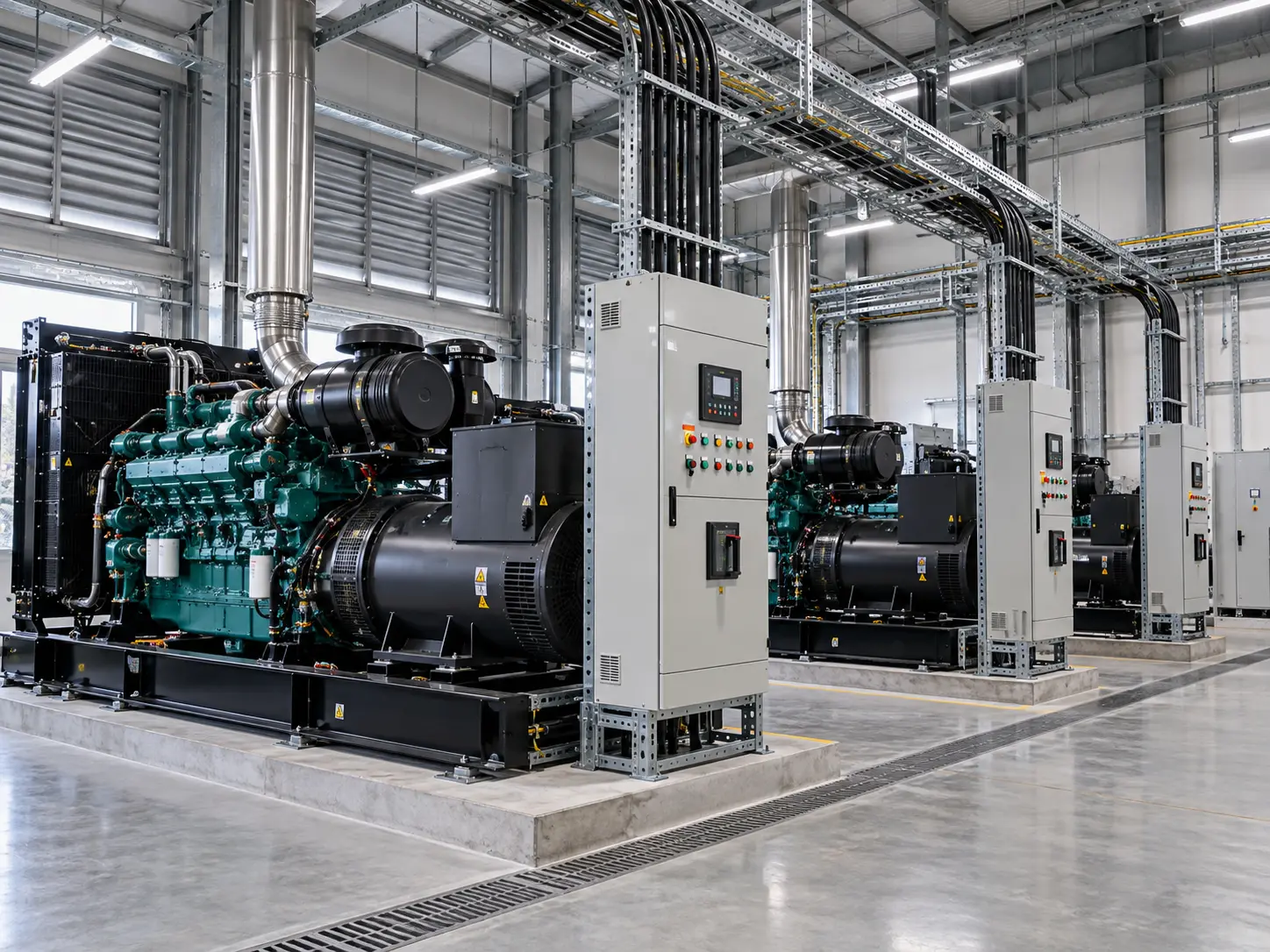
Large industrial projects do not always require a single generating unit.
For facilities with varying loads, multiple synchronized generators may offer additional flexibility.
Option A: One 1500kW Generator
Potential advantages:
-
One main generating unit
-
A relatively straightforward single-generator arrangement
-
Fewer engines to maintain
Potential limitations:
-
No independent generator redundancy
-
Full generating capacity becomes unavailable during shutdown
-
Less flexibility when demand is consistently low
Option B: Two 1000kW Generators in Parallel
Potential advantages:
-
Ability to operate individual generators according to demand
-
Greater configuration flexibility
-
Potential maintenance flexibility
-
Up to 2000kW combined rated capacity under the specified duty
However, two 1000kW generators do not automatically provide 2000kW of redundant power.
If the project must remain operational after one generator fails, only the surviving generator's available rated capacity can be counted.
Therefore, a two-unit system with one-unit redundancy may provide approximately 1000kW of firm capacity, subject to site and operating conditions.
What About N+1 Redundancy?
For applications where continuous electricity availability is essential, the power system may require additional reserve capacity.
A properly engineered N+1 arrangement provides sufficient generating capacity to support the required load after one generator becomes unavailable.
This requires appropriate synchronization, controls, protection coordination, fuel systems, and electrical distribution design.
Multi-generator solutions should be evaluated where system availability is more important than minimizing the number of generating units.
9. Which Applications Need 1000kW or 1500kW Generators?
Both capacities can serve a wide range of industrial applications.
| Industrial Application | Selection Considerations |
|---|---|
| Manufacturing factories | Maximum demand, motor starting and production continuity |
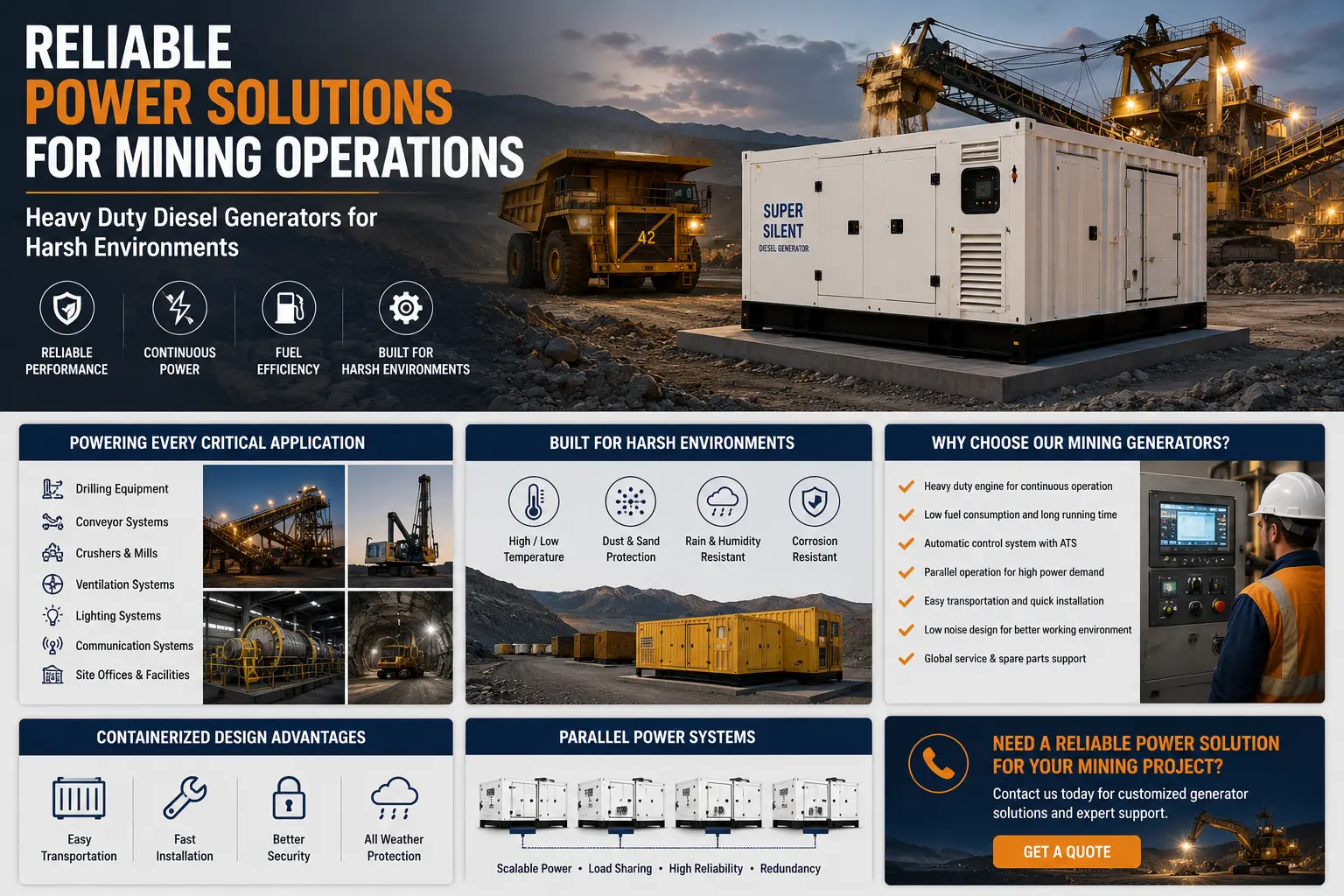
| Mining facilities | Prime power, harsh environments and future expansion |
| Oil and gas operations | Continuous-duty requirements, remote access and fuel logistics |
| Hospitals | Emergency load schedule, electrical compliance and redundancy |
| Data centers | Critical-load design, UPS integration and backup reliability |
| Construction projects | Temporary loads, mobility and phased power requirements |
| Industrial processing plants | Large motors, load variation and maintenance access |
The industry sector alone does not determine generator capacity.
Two factories of similar size may have completely different electrical loads.
Likewise, a remote oilfield may require one large generator or several smaller synchronized units, depending on how its equipment operates.
10. How to Request an Accurate Diesel Generator Quotation
For international buyers, a detailed RFQ allows suppliers to prepare more accurate technical and commercial proposals.
Before requesting a 1000kW or 1500kW diesel generator quotation, provide the following information.
| Requirement | Details Needed |
|---|---|
| Required generating power | 1000kW, 1500kW or measured demand |
| Application | Standby, prime or continuous |
| Frequency | 50Hz or 60Hz |
| Voltage | Required nominal voltage |
| Installation | Open, silent or containerized |
| Engine preference | MTU, Mitsubishi or other approved brand |
| Operating hours | Expected daily and annual hours |
| Load information | Average, maximum, motor starting and future growth |
| Site conditions | Ambient temperature, altitude and location |
| Electrical requirements | ATS, synchronization, voltage regulation and protection |
| Delivery destination | Country and delivery port or project site |
Buyers should also request:
-
Confirmed technical specification sheets
-
Fuel consumption data at relevant loads
-
Dimensional drawings
-
Available test documentation
-
Warranty information
-
Spare parts and maintenance information
-
Commercial terms and expected delivery schedule
A properly prepared RFQ can significantly improve supplier evaluation and reduce delays during the purchasing process.
Frequently Asked Questions
Is a 1500kW diesel generator always better than a 1000kW generator?
No. A 1500kW generator provides greater rated output, but the correct selection depends on the actual load profile, operating duty, starting requirements, and expected future demand.
Can a 1000kW generator supply an 800kW factory?
Potentially, yes. However, the generator must have an appropriate rating, and its capacity must be checked against motor starting, site derating, allowable operating conditions, and reserve requirements.
Can a 1500kW standby generator provide 1500kW continuously?
Not necessarily. A 1500kW standby-rated generator may have a lower prime or continuous rating. Buyers must check the specific model's approved duty ratings.
Is two 1000kW generators better than one 1500kW generator?
It depends on operating flexibility, redundancy requirements, installation costs, system complexity, and expected load variation. A parallel system requires additional electrical engineering and control equipment.
How do I compare the fuel costs of two different generator sizes?
Compare manufacturer fuel consumption data at the same electrical output and relevant operating conditions. Include maintenance and lifecycle costs for a meaningful comparison.
Why Choose FORYOU POWER for Industrial Diesel Generators?
FORYOU POWER provides industrial diesel generator sets and customized power generation configurations for international projects.
Our diesel generator product portfolio includes equipment using established engine platforms such as Cummins, Perkins, MTU, Mitsubishi, Baudouin, and Doosan.
We help customers evaluate important project requirements, including:
-
Electrical generating capacity
-
Suitable standby and prime ratings
-
Engine and alternator configurations
-
Generator enclosure options
-
Synchronization requirements
-
Industrial installation conditions
Whether your project requires a 1000kW generator, a 1500kW generator, or a multi-generator system, our team can discuss appropriate equipment options.
Explore FORYOU POWER Diesel Generators
Conclusion: Select Generator Capacity Based on Real Operating Needs
The choice between a 1000kW and 1500kW diesel generator should be based on engineering requirements rather than rated power alone.
For smaller industrial loads, a correctly selected 1000kW generator may provide a suitable balance of capacity, operating efficiency, and investment.
For higher electrical demand, substantial motor starting requirements, or planned expansion, a 1500kW-class generator may offer additional flexibility.
For mission-critical industrial applications, multi-generator configurations may also be worth considering.
The best power solution is one that matches your actual load profile, meets required reliability standards, and supports your long-term operating requirements.
Looking for a 1000kW or 1500kW diesel generator supplier?
Contact FORYOU POWER with your required capacity, operating duty, voltage, frequency, and project location.
Our team can review your requirements and discuss suitable generator configurations.
FUJIAN FORYOU POWER TECH CO., LTD.
Website: https://foryougen.com
Email: info@foryougen.com
Request a Diesel Generator Quotation
Technical References
How to Choose a 1000kW Diesel Generator in 2026: Complete Industrial Buying Guide