How to Choose a 1000kW Diesel Generator in 2026: Complete Industrial Buying Guide
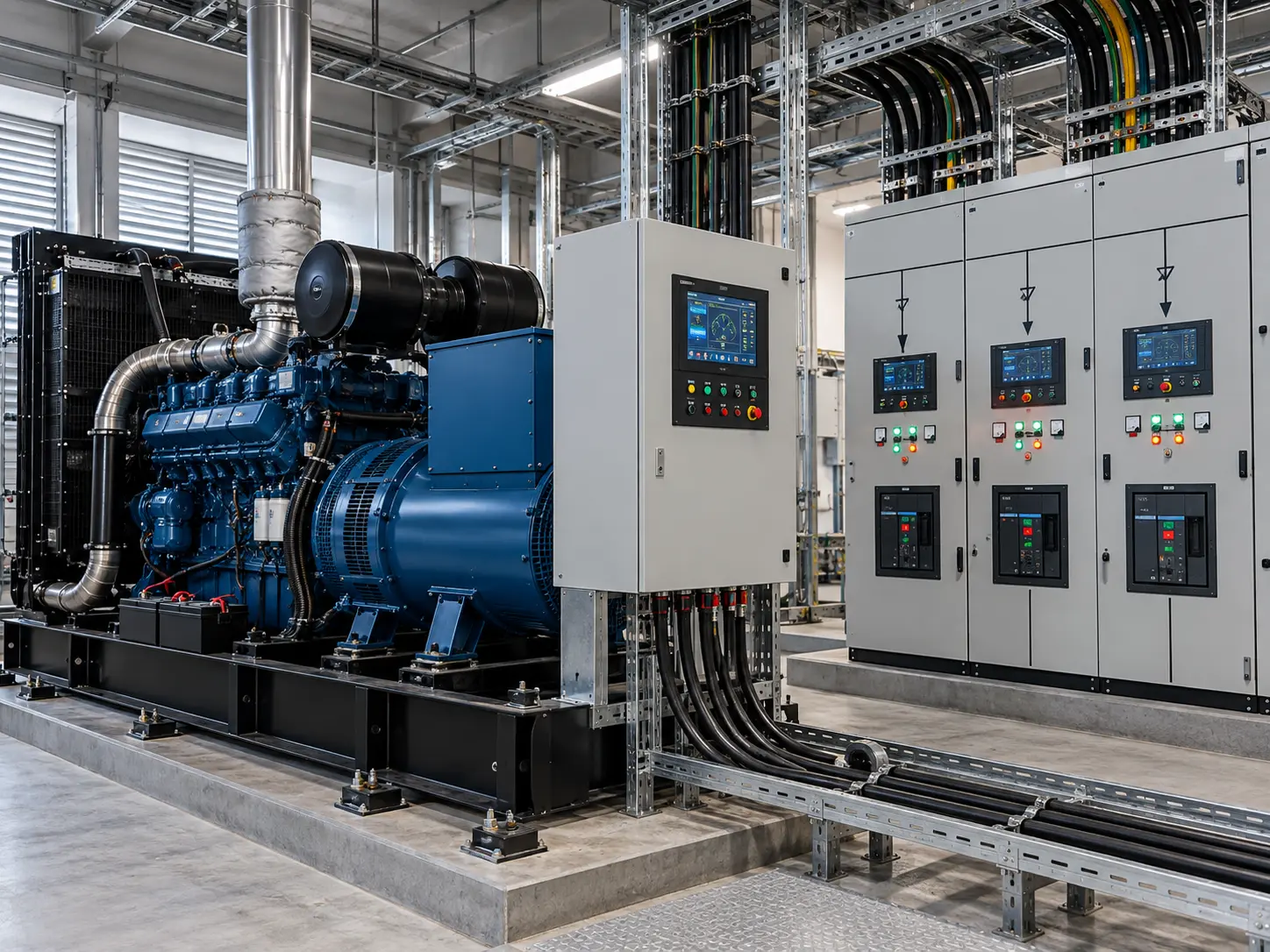
How to Choose a 1000kW Diesel Generator in 2026: Complete Industrial Buying Guide
Published: October 25, 2026 | FORYOU POWER
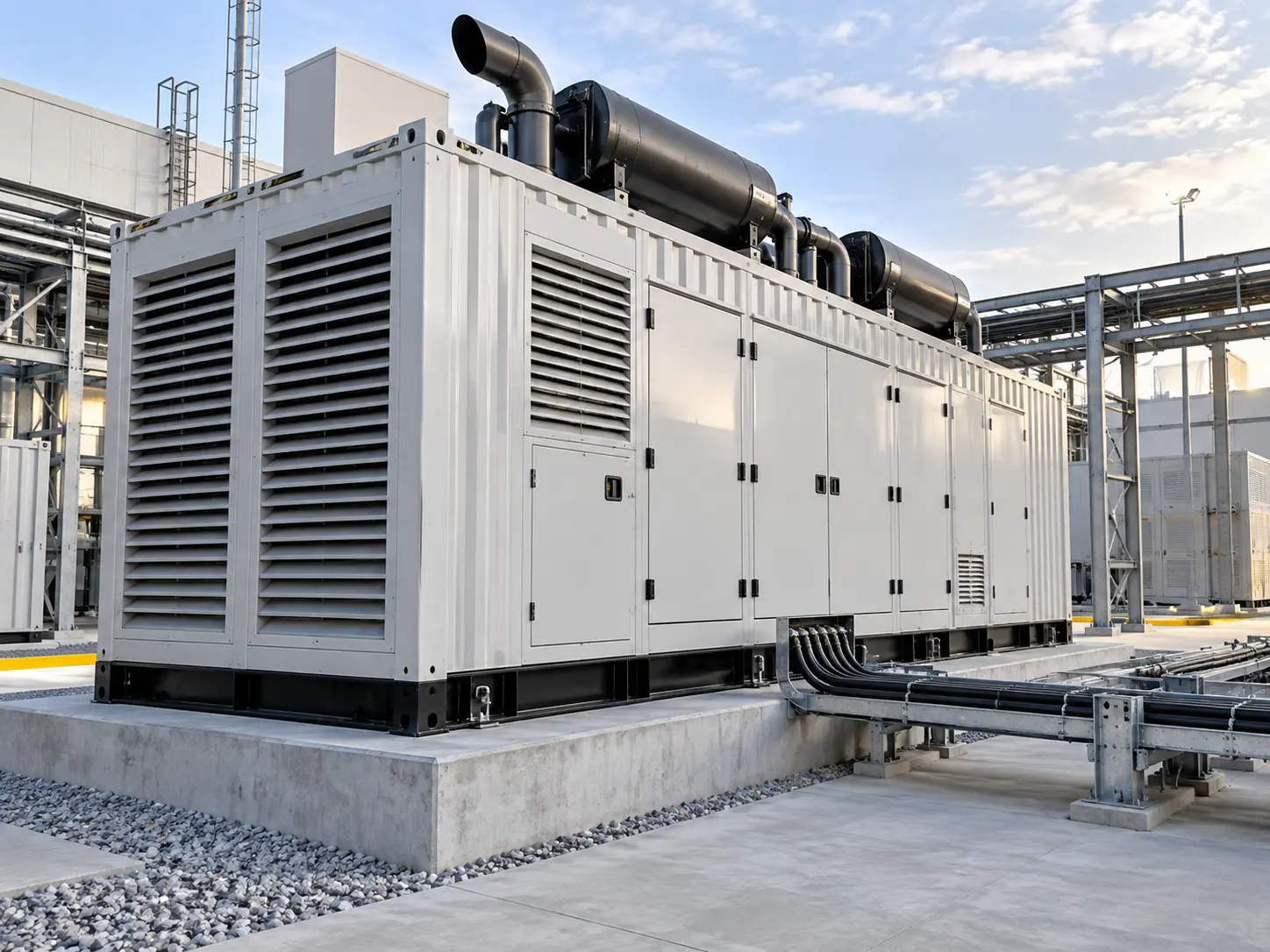
Choosing a 1000kW diesel generator is a major investment for any industrial facility. Whether you need emergency backup power for a factory, continuous electricity for a remote mining operation, or reliable power for a large construction project, selecting the correct generator requires more than comparing prices.
Power ratings, engine performance, fuel consumption, operating conditions, and electrical configurations all affect the reliability and long-term cost of your power system.
With demand for dependable electricity growing across industrial and digital infrastructure, large diesel generators remain essential components of critical power systems.
In September 2026, Generac and Amazon announced a long-term agreement for backup generators supporting Amazon's data centers, with approximately $2.4 billion in initial deliveries expected during 2027 and 2028.
The agreement highlights the continuing importance of reliable backup generation.
In this guide, FORYOU POWER explains 10 essential factors to consider when buying a 1000kW diesel generator for industrial applications.
1. Understanding 1000kW vs. 1250kVA Diesel Generators
One of the most common questions among international buyers is:
Is a 1000kW generator the same as a 1250kVA generator?
The answer depends on the power factor.
Electrical generator capacity is commonly specified in two units:
-
kW (Kilowatts): Real electrical power available to perform useful work.
-
kVA (Kilovolt-Amperes): Apparent electrical power supplied by the generator.
The relationship is:
kW = kVA × Power Factor
For a generator rated at a power factor of 0.8:
1000kW = 1250kVA × 0.8
Therefore, a 1000kW three-phase diesel generator is commonly associated with a 1250kVA rating.
However, buyers must also verify whether the advertised capacity refers to standby power, prime power, or continuous power.
A generator listed as 1250kVA standby may not provide 1250kVA under prime operating conditions.
This distinction is essential when evaluating a generator quotation.
2. Standby vs. Prime vs. Continuous Power Ratings
Before purchasing an industrial diesel generator, buyers must understand the generator's operating duty.
International standard ISO 8528-1 establishes rating categories used in generator specifications.
| Power Rating | Description | Typical Application |
|---|---|---|
| Emergency Standby Power (ESP) | Emergency supply during utility outages, subject to specified operating limits | Hospitals, factories, commercial buildings |
| Prime Rated Power (PRP) | Power for variable-load operation over extended periods within specified conditions | Construction sites, remote industrial facilities |
| Continuous Operating Power (COP) | Continuous power for a constant load under agreed conditions | Dedicated industrial power installations |
Important: A 1000kW standby generator should not automatically be selected for an application requiring 1000kW of continuous or prime power.
For example, the Cummins C1250D5AB is rated at:
-
Standby Power: 1000kW / 1250kVA
-
Prime Power: 900kW / 1125kVA
-
Frequency: 50Hz
The same generator model can have different power ratings depending on its duty cycle.
When requesting quotations, always specify whether the required capacity is standby, prime, or continuous power.
Reference: Cummins C1250D5AB Specifications
3. Determine Your Actual Electrical Load
Accurate load calculation is one of the most important steps in generator selection.
Choosing a generator based only on the total rated power of the connected equipment can result in incorrect sizing.
Buyers should identify:
-
Total running power demand
-
Maximum simultaneous electrical load
-
Motor starting requirements
-
Starting sequence of major equipment
-
Power factor and reactive power demand
-
Nonlinear loads and harmonics
-
Anticipated future expansion
Why Motor Starting Matters
Large industrial motors can create significant starting currents, particularly when using direct-on-line starting.
These transient electrical demands can cause voltage and frequency dips.
Pumps, air compressors, cranes, and conveyor systems may require additional generator capacity or appropriate starting equipment.
Variable-frequency drives and soft starters can sometimes reduce starting demands, but their effects on generator performance must also be evaluated.
A correctly sized generator must support both steady-state operation and acceptable transient performance.
Practical recommendation: Provide your supplier with a detailed load schedule rather than requesting a generator based only on a single total kW figure.
4. Choose the Right Engine and Generator Configuration
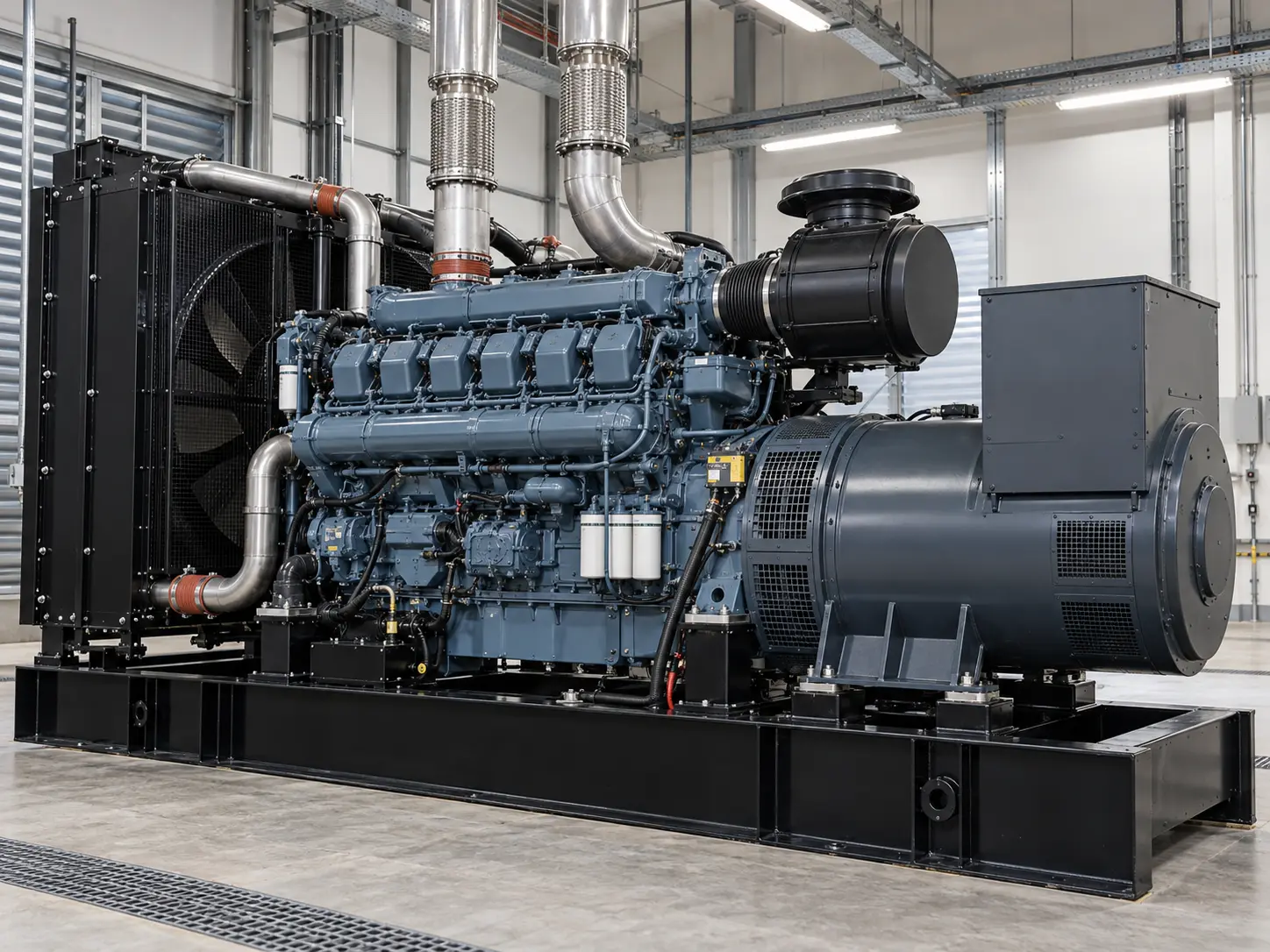
The diesel engine is a critical component of the generator set.
Engine selection influences fuel efficiency, maintenance planning, load response, and long-term operating performance.
Industrial generator projects commonly evaluate engines from established manufacturers such as Cummins, Perkins, MTU, Mitsubishi, Baudouin, and other suppliers.
However, the engine brand alone does not determine generator performance.
Buyers should also assess:
-
Engine model and operating rating
-
Alternator specifications
-
Electronic governor and automatic voltage regulator
-
Control panel functionality
-
Cooling system design
-
Electrical protection
-
Maintenance accessibility
-
Spare parts availability
FORYOU POWER 1000kW-Class Generator Options
FORYOU POWER offers industrial diesel generator configurations using several engine platforms.
Examples from the published product range include:
| FORYOU Model | Engine Model | Standby Power | Prime Power |
|---|---|---|---|
| FY-1250MTU | 18V2000G65 | 1000kW / 1250kVA | 900kW / 1125kVA |
| FY-1375MTU | 12V4000G23RF | 1100kW / 1375kVA | 1000kW / 1250kVA |
| FY-1313SME | S12R-PTA-C | 1050kW / 1312.5kVA | 1000kW / 1250kVA |
These configurations illustrate why buyers must compare operating ratings instead of relying only on a generator's model name or advertised capacity.
Final specifications, available options, emissions compliance, and delivery conditions should be confirmed for each project.
Explore:
FORYOU POWER MTU Diesel Generator Series
FORYOU POWER Mitsubishi Diesel Generator Series
5. Confirm Voltage and Frequency: 50Hz vs. 60Hz
Voltage and frequency are critical requirements for international generator projects.
Many countries use 50Hz electrical systems, while others operate primarily at 60Hz.
Common three-phase voltage configurations include:
| Frequency | Examples of Voltage Configurations |
|---|---|
| 50Hz | 380/220V, 400/230V, 415/240V |
| 60Hz | 208/120V, 220/127V, 480/277V |
These are examples, not universal national standards.
For large industrial facilities, medium-voltage systems may also be necessary.
A generator designed for one voltage or frequency should not be assumed to support another configuration without appropriate engineering.
Changing frequency may affect engine speed, cooling requirements, alternator performance, and available power.
Before placing an order, buyers should specify the required voltage, frequency, phase configuration, power factor, and applicable electrical standards.
6. Evaluate Diesel Fuel Consumption and Operating Costs
Fuel consumption is one of the largest operating expenses for industrial diesel generator systems.
The actual consumption of a 1000kW diesel generator varies according to:
-
Engine model
-
Electrical loading percentage
-
Engine efficiency
-
Ambient operating conditions
-
Fuel characteristics
-
Maintenance condition
Generator manufacturers typically provide fuel consumption data at several operating points, such as 25%, 50%, 75%, and 100% load.
A meaningful comparison should use the same power output and duty conditions for each generator.
Calculate the Total Operating Cost
A basic fuel cost estimate can be developed using:
Fuel Cost = Fuel Consumption (L/hour) × Operating Hours × Diesel Price (per liter)
For a complete evaluation, buyers should also account for:
-
Scheduled maintenance
-
Engine oil and filtration
-
Spare parts
-
Fuel storage and delivery
-
Installation and commissioning
-
Emissions compliance costs
-
Expected equipment service life
The generator with the lowest initial quotation is not necessarily the most economical over several years of operation.
For long-duration power projects, total cost of ownership should be a central purchasing criterion.
7. Choose Between Open-Type, Silent and Containerized Generators
Generator enclosure design affects equipment installation, noise, maintenance, and environmental protection.
Open-Type Diesel Generator
An open-type generator is typically installed in a dedicated generator room or protected industrial facility.
Advantages may include easier access to certain components and flexibility in designing the surrounding installation.
However, ventilation, exhaust, fire safety, and acoustic treatment must be engineered separately.
Silent Diesel Generator
A silent or sound-attenuated generator incorporates an acoustic enclosure designed to reduce operating noise.
This configuration is often suitable for commercial and industrial locations where noise limitations apply.
Buyers should request sound pressure measurements at a defined distance and load condition.
Containerized Diesel Generator
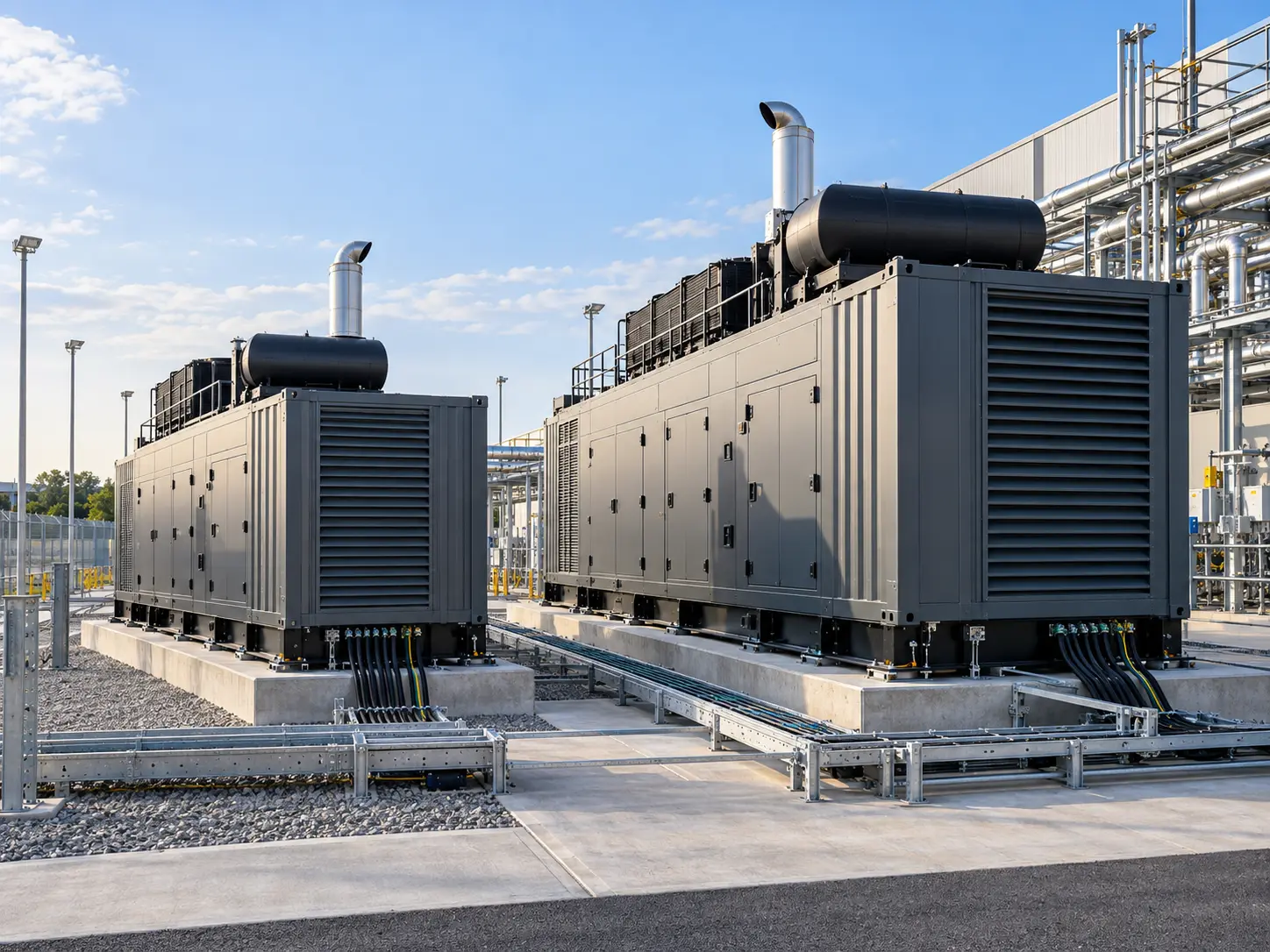
Containerized generators are commonly considered for large industrial and remote power projects.
Potential advantages include:
-
Integrated equipment protection
-
Factory-installed auxiliary equipment
-
Modular site arrangement
-
Transportation convenience
-
Easier planning for multi-generator installations
Containerized generators still require proper foundations, ventilation, electrical integration, fuel connections, and commissioning.
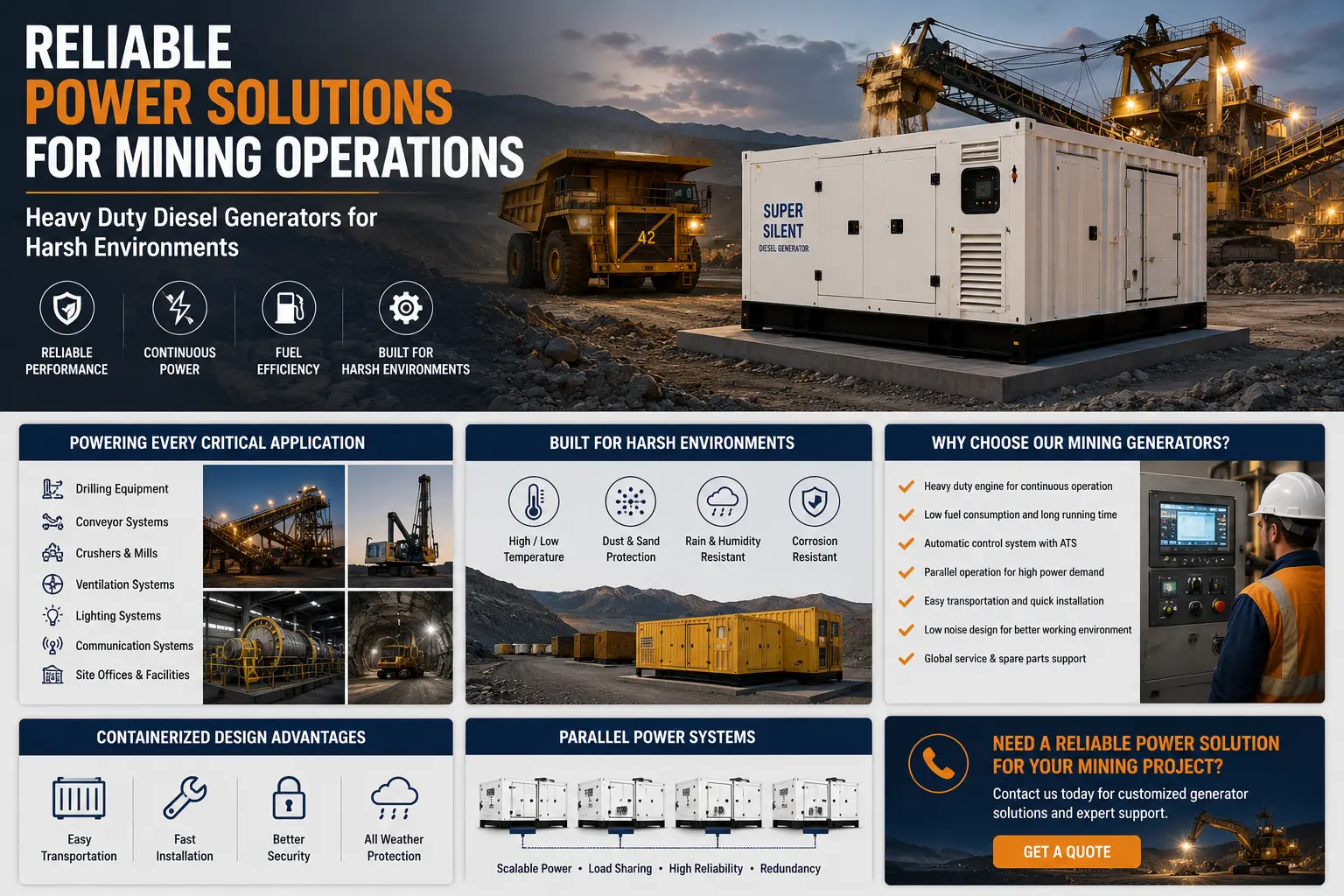
For mining sites, oilfields, and temporary industrial installations, containerized power solutions can offer significant project flexibility.
8. Consider Automatic Transfer Switches and Parallel Operation
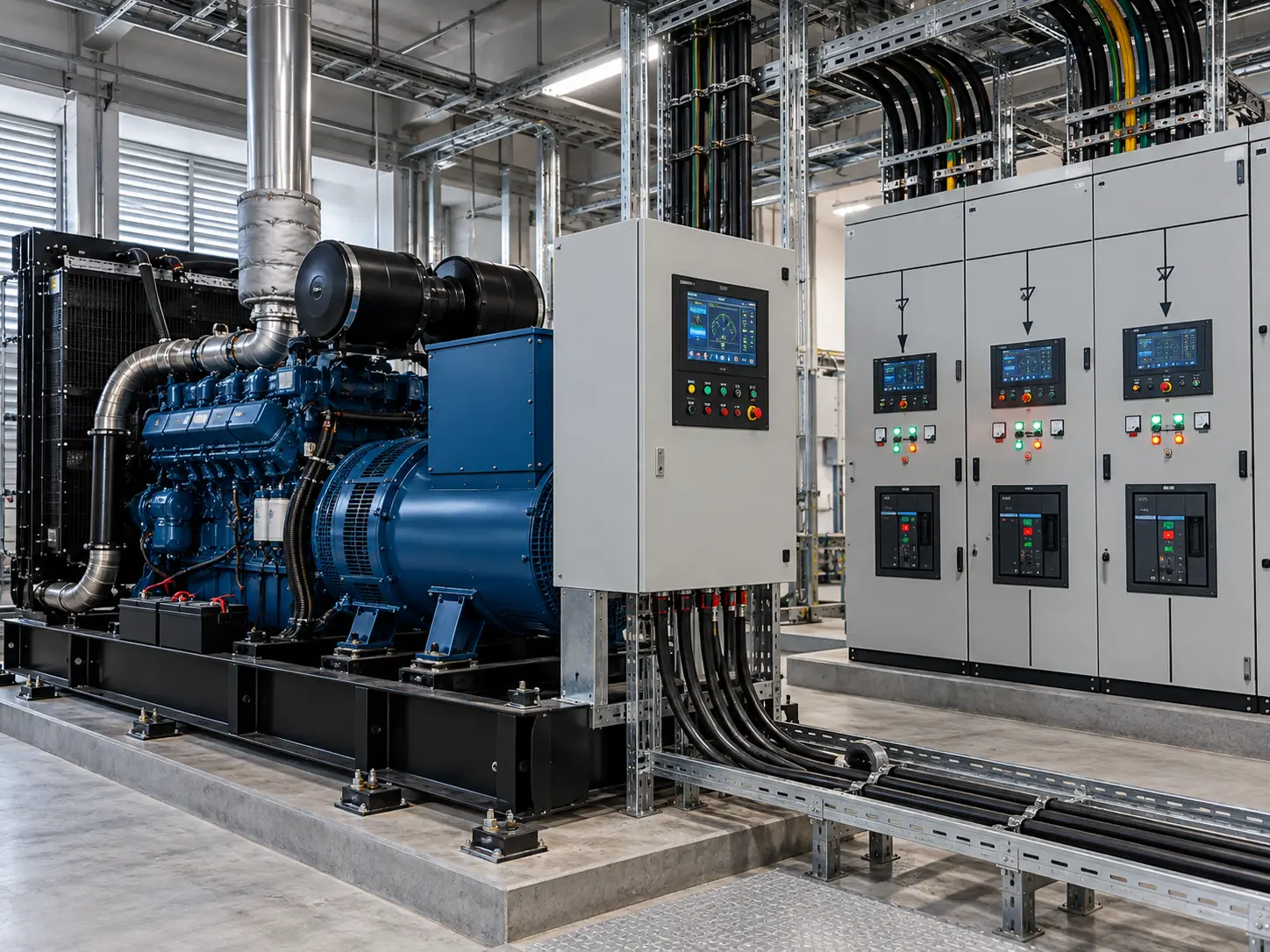
For emergency backup applications, an Automatic Transfer Switch (ATS) can transfer the electrical load from the utility supply to the generator system when the normal power source becomes unavailable.
A typical backup system may include:
-
Diesel generator set
-
ATS or appropriately engineered switching equipment
-
Generator controller
-
Main circuit breaker and protection devices
-
Fuel supply system
-
Remote monitoring equipment
The selected equipment must be coordinated with the facility's electrical design and applicable safety requirements.
When Is Generator Synchronization Necessary?
Large industrial facilities may require several diesel generators operating together.
Parallel generator systems can support:
-
Increased overall capacity
-
Load sharing between generating units
-
Phased expansion
-
Improved maintenance flexibility
-
Redundancy when correctly designed
For example, a facility requiring 2000kW of generating capacity may consider multiple generator units instead of a single machine.
However, a two-generator installation does not automatically provide full redundancy. The available reserve capacity depends on the number, rating, and operating arrangement of the generators.
Proper synchronization, protection coordination, and load-management engineering are essential.
9. Check Environmental Conditions and Installation Requirements
A diesel generator's performance depends partly on its operating environment.
High temperatures and elevations can reduce available engine power and cooling effectiveness.
For challenging locations, buyers should provide:
-
Maximum ambient temperature
-
Minimum ambient temperature
-
Site altitude
-
Humidity and dust conditions
-
Required noise limits
-
Indoor or outdoor installation details
-
Space limitations
-
Local emissions requirements
Special Considerations for Remote Industrial Sites
Mining and oil and gas projects may operate under extremely demanding conditions.
A generator designed for moderate ambient temperatures may require an upgraded cooling system for hotter environments.
Similarly, cold-weather applications may require suitable battery systems, engine heating, fuel treatment, and other starting provisions.
The supplier should confirm the generator's available output under the actual site conditions.
10. What Should Buyers Include in a 1000kW Diesel Generator RFQ?
A clear Request for Quotation (RFQ) helps manufacturers recommend a suitable generator configuration and provide an accurate commercial offer.
Before contacting a supplier, prepare the following information.
| Requirement | Information to Provide |
|---|---|
| Power capacity | 1000kW / 1250kVA or actual required load |
| Power duty | Standby / Prime / Continuous |
| Frequency | 50Hz or 60Hz |
| Voltage | Required project voltage |
| Installation | Indoor / Outdoor / Containerized |
| Engine preference | Preferred brand or acceptable alternatives |
| Load characteristics | Running load, peak demand and motor starting |
| Operating hours | Expected daily and annual use |
| Environmental conditions | Temperature and altitude |
| Control requirements | ATS / Synchronization / Remote monitoring |
| Delivery destination | Country, port or project location |
| Required documents | Technical datasheet, drawings, test documents and certificates |
It is also useful to request the proposed model's performance data, fuel consumption table, warranty terms, delivery schedule, and applicable certification documents.
A complete technical inquiry significantly reduces the risk of selecting unsuitable equipment.
Frequently Asked Questions About 1000kW Diesel Generators
How much does a 1000kW diesel generator cost?
The purchase price depends on engine brand, alternator, power rating, voltage, enclosure type, emissions requirements, control equipment, and delivery scope.
Buyers should compare quotations based on matching technical specifications rather than price alone.
Can a 1000kW diesel generator run 24 hours a day?
A generator designed and rated for the relevant prime or continuous-duty application may be suitable for extended operation, provided that load limits, maintenance requirements, cooling capacity, and fuel arrangements are satisfied.
A 1000kW emergency standby rating does not automatically qualify the same generator to supply 1000kW continuously.
What size generator is required for a 1000kW industrial load?
The answer depends on whether 1000kW is the continuous running load, maximum demand, or emergency peak requirement.
Motor starting, load steps, power factor, site conditions, and reserve capacity must also be considered.
A generator with a 1000kW standby rating may be insufficient for a facility requiring 1000kW of prime power.
Can a 1000kW generator be installed in a container?
Yes. Industrial generator sets in this power class can be designed for containerized installation, subject to equipment dimensions, ventilation, exhaust, cooling, safety requirements, and the available container arrangement.
Is a 1250kVA generator suitable for a factory?
A 1250kVA generator may be suitable for a factory, depending on its kW rating, duty classification, starting requirements, and actual electrical demand.
A detailed load analysis is necessary before confirming generator capacity.
Why Choose FORYOU POWER?
FORYOU POWER provides diesel generator sets and customized industrial power solutions for international customers.
Our generator portfolio includes configurations using engines from manufacturers such as Cummins, Perkins, MTU, Mitsubishi, Baudouin, and Doosan.
We support customers evaluating power generation requirements for factories, mining operations, oil and gas facilities, construction projects, and other industrial applications.
Our product solutions include:
-
Open-type industrial diesel generators
-
Silent diesel generator sets
-
Containerized power generation systems
-
Generator synchronization configurations
-
Customized industrial power solutions
Our objective is to help buyers identify generator configurations appropriate for their operating requirements and project budgets.
Explore our Industrial Diesel Generator Sets or review the MTU Diesel Generator Series.
Conclusion: Choose the Right Generator, Not Just the Lowest Price
Purchasing a 1000kW diesel generator requires careful evaluation of technical specifications and operating requirements.
Understanding the difference between standby and prime ratings, calculating actual electrical loads, and selecting suitable engine and control configurations can help industrial buyers avoid costly mistakes.
A properly specified generator system should provide dependable performance, manageable operating costs, and suitable capacity for future requirements.
Need a 1000kW or 1250kVA diesel generator quotation?
Contact FORYOU POWER with your application, required power rating, voltage, frequency, project location, and expected operating hours.
Our team can review your requirements and discuss available generator configurations.
FUJIAN FORYOU POWER TECH CO., LTD.
Website: https://foryougen.com
Email: info@foryougen.com
Contact FORYOU POWER for a Quotation
Technical References
1000kW vs 1500kW Diesel Generator: Which Size Is Right for Your Project in 2026?
Inside Our Diesel Generator Factory: From Steel to Reliable Power