2027 Generator Set Market Outlook: 7 Trends Shaping Global Diesel, Gas and Hybrid Power Demand
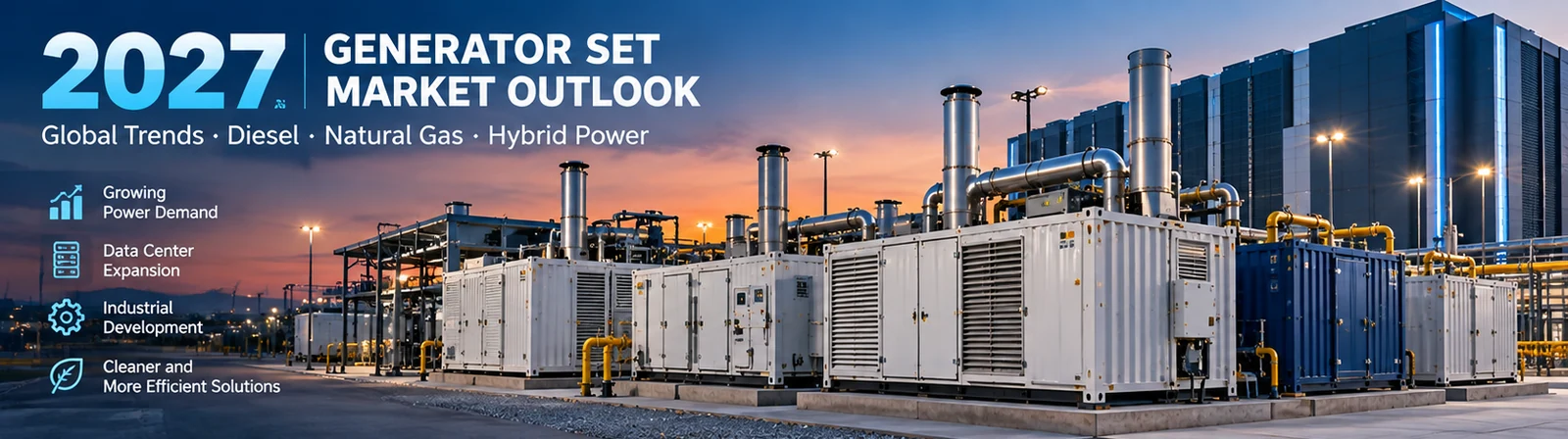
2027 Generator Set Market Outlook: 7 Trends Shaping Global Diesel, Gas and Hybrid Power Demand
Published: October 25, 2026 | FORYOU POWER Industry Insights
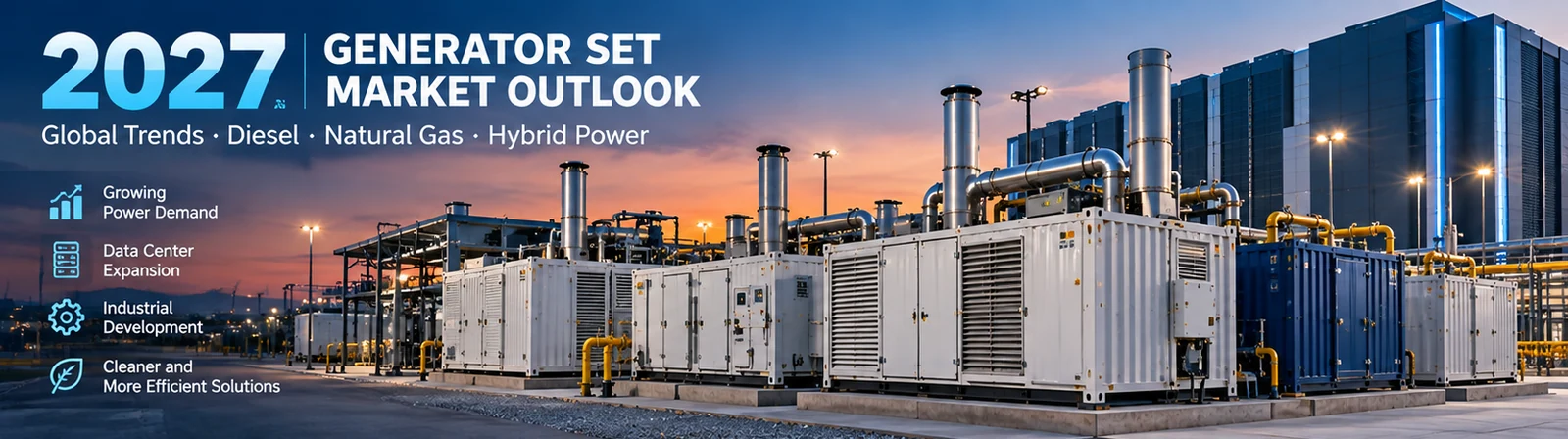
The global generator set market outlook for 2027 points toward continued growth, supported by increasing electricity consumption, artificial intelligence infrastructure, industrial expansion, and growing demand for reliable power.
However, the generator industry is undergoing a fundamental transformation.
Diesel generator sets remain essential for emergency backup and industrial applications. Natural gas generators are attracting investment in distributed power generation, while hybrid energy systems, containerized solutions, and intelligent controls are creating new opportunities.
According to the International Energy Agency (IEA), global electricity demand is forecast to grow by 3.8% in 2027, compared with 3.6% in 2026.
For generator manufacturers, EPC contractors, distributors, and industrial buyers, these developments raise an important question:
What will drive generator set demand in 2027, and which technologies and markets offer the strongest opportunities?
In this industry outlook, FORYOU POWER examines seven trends shaping the future of diesel, natural gas, and hybrid power generation.
1. Global Generator Set Market: Continued Growth Expected in 2027
The global generator set industry entered 2026 with a positive long-term growth outlook.
According to Frost & Sullivan research published through Messe Frankfurt in August 2026, the global generator set market was valued at approximately USD 18.37 billion in 2025.
The industry is projected to reach USD 28.17 billion by 2035, representing a compound annual growth rate (CAGR) of approximately 4.4%.
If this long-term growth rate were applied evenly from the 2025 baseline, it would imply a market of roughly USD 20 billion in 2027. This is an illustrative calculation, not a separate published 2027 market-size forecast.
The market's expansion is supported by several structural factors:
-
Growing industrial electricity demand
-
Increasing data center construction
-
Demand for backup power in critical facilities
-
Remote infrastructure development
-
Electricity grid reliability challenges
-
Investment in distributed and modular generation
A Growing Electricity Market Creates New Opportunities
The IEA's July 2026 Electricity Mid-Year Update projects global electricity consumption to increase from 28,600 TWh in 2025 to approximately 30,700 TWh in 2027.
Nevertheless, greater electricity demand does not automatically translate into equivalent generator set sales growth.
Actual equipment demand will depend on electricity grid investment, project approvals, regional fuel economics, and customer requirements.
2027 Outlook: Continued demand growth is likely, particularly in applications where uninterrupted or independent electricity supply is essential.
Source: IEA Electricity Mid-Year Update 2026
2. AI Data Centers Will Remain an Important Generator Market
Artificial intelligence is one of the most significant developments affecting global electricity infrastructure.
Advanced data centers require dependable power systems capable of supporting high electrical loads and maintaining operational continuity.
The IEA's April 2026 report, Key Questions on Energy and AI, projected that global data center electricity consumption would rise from approximately 485 TWh in 2025 to 950 TWh by 2030.
This expansion is creating opportunities for:
-
High-capacity diesel backup generator sets
-
Natural gas prime power systems
-
Multiple synchronized generator installations
-
Power management equipment
-
Battery energy storage integration
-
Modular power generation solutions
Major Orders Already Point Toward 2027
In September 2026, Generac announced a long-term generator supply agreement with Amazon.
The agreement includes expected initial deliveries totaling approximately USD 2.4 billion during 2027 and 2028.
This is an important signal that large data center operators continue to regard standby generation as a critical infrastructure investment.
However, data center projects require more than high generating capacity.
Critical considerations include:
Power Reliability: Equipment must meet the facility's availability and operational requirements.
Load Acceptance: Generators must respond appropriately to changing electrical demands.
Redundancy: Multiple-unit systems must be designed to maintain essential power during equipment failure or maintenance.
System Integration: Generators must coordinate with electrical switchgear, UPS systems, protection equipment, and facility controls.
Environmental Compliance: Local emissions, noise, and permitting requirements must be evaluated.
For 2027, demand may increasingly favor suppliers capable of delivering complete engineered power packages rather than standalone generator equipment.
Source: Generac SEC Filing, September 16, 2026
3. Diesel Generators Will Remain Essential for Backup Power
Despite growing interest in alternative energy technologies, diesel generator sets are expected to retain a substantial role in the global power generation industry.
Frost & Sullivan estimates that diesel generators represented approximately 82.8% of global generator set market revenue in 2025.
This historical market share demonstrates the established position of diesel technology, although it should not be interpreted as a confirmed market share for 2027.
Why Diesel Generators Remain Competitive
Diesel generator sets provide several practical advantages.
Established Technology
Diesel engines have a long operating history across commercial and industrial applications.
High Power Density
Industrial diesel generators can deliver substantial electrical output in relatively compact configurations.
Flexible Deployment
Diesel generator systems can be installed in permanent generator rooms, outdoor enclosures, or transportable containers.
Fuel Storage Options
For suitable applications, on-site fuel storage allows generators to operate independently of natural gas pipelines.
Wide Application Range
Diesel generators are commonly used in hospitals, factories, mining operations, construction projects, telecommunications, and emergency power systems.
What Will Change in 2027?
Buyers are likely to place greater emphasis on:
-
Fuel efficiency
-
Emissions compliance
-
Reliable automatic operation
-
Remote monitoring
-
Maintenance accessibility
-
Engine and alternator quality
-
Lifecycle operating costs
For industrial projects, generator suppliers that combine dependable equipment with strong engineering support may have a competitive advantage.
Explore FORYOU POWER Diesel Generator Sets.
4. Natural Gas Generators May Gain Share in Industrial Power
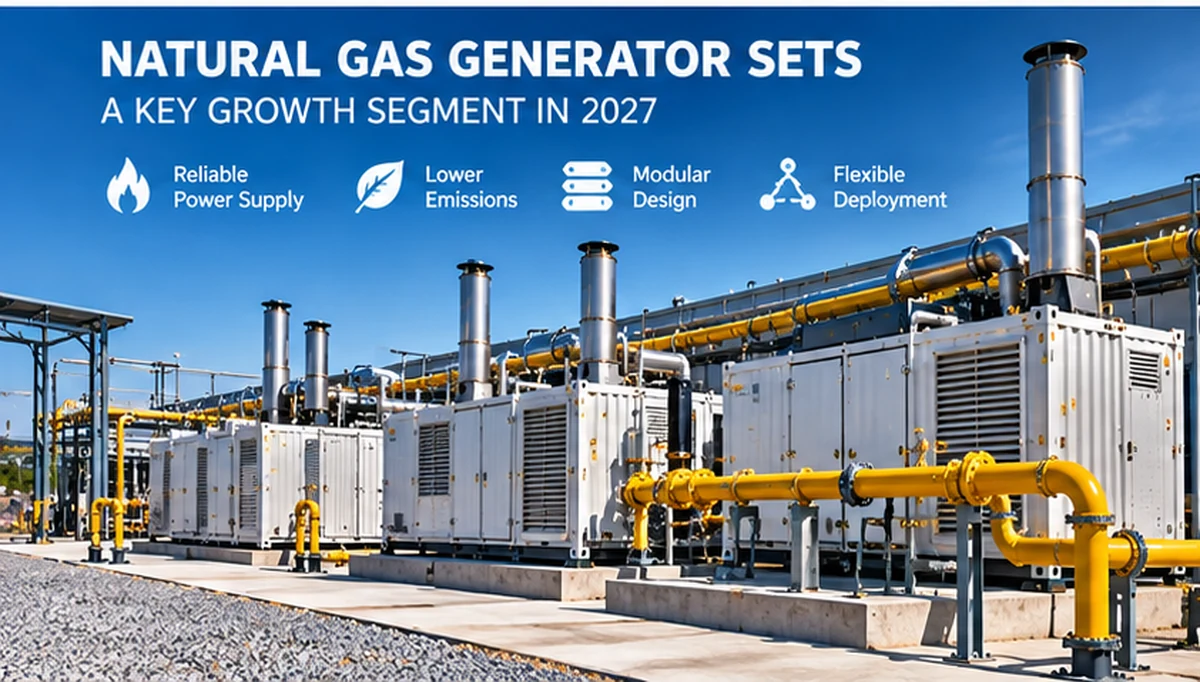
Natural gas generation represents another important trend in the 2027 generator set market outlook.
According to Frost & Sullivan, the gas generator segment is projected to grow at approximately 4.9% annually from 2025 to 2035, slightly faster than the diesel generator segment.
The expansion is supported by demand for industrial prime power, distributed electricity generation, and certain data center applications.
A Major Supply Agreement for 2027
On October 8, 2026, INNIO and Aggreko announced an extension of their strategic partnership through 2031.
Under the agreement, INNIO committed to supplying at least 450 MW of medium-power gas engine capacity in 2027.
The equipment is intended to support flexible power applications, including mobile and industrial generation.
This development illustrates the importance of modular gas engine solutions in markets where power infrastructure is constrained.
Where Natural Gas Generators Have Potential
Natural gas generator sets may be suitable for:
-
Oil and gas processing facilities
-
Industrial power plants
-
Remote sites with available gas supplies
-
Distributed generation facilities
-
Certain data center prime power systems
-
Combined heat and power installations
However, natural gas generation is not suitable for every application.
Operating economics depend on gas prices, supply reliability, engine efficiency, operating hours, local emissions requirements, and maintenance.
Gas price volatility and fuel supply constraints could also limit adoption in some markets.
2027 Outlook: Natural gas generators are likely to gain attention for prime and distributed power applications, particularly where dependable fuel infrastructure is available.
Source: INNIO–Aggreko Partnership Announcement
Explore FORYOU POWER Natural Gas Generators.
5. Containerized and Modular Power Systems Will Become More Important
Large industrial projects increasingly require flexible electricity infrastructure.
Instead of installing one large generator, some developers are evaluating multiple synchronized generator units arranged in modular systems.
Containerized generator solutions can simplify certain aspects of equipment transportation, integration, installation planning, and future expansion.
Advantages of Modular Generator Systems
Scalable Capacity
A project can be designed with multiple generating units to achieve its required capacity.
Flexible Operation
Individual generators may be dispatched according to electrical demand when the system is appropriately engineered.
Maintenance Planning
Multiple-unit configurations can provide maintenance flexibility if sufficient reserve generating capacity is available.
Remote Installation
Containerized generators can be useful for oilfields, mining facilities, and temporary industrial power projects.
Project Expansion
Additional units can sometimes be integrated when the original electrical and mechanical systems have been designed for expansion.
Example: Modular Power for Oil and Gas Operations
FORYOU POWER has presented a 3.6 MW natural gas power project configuration for oil and gas applications involving three 1.2 MW generating modules.
This type of arrangement illustrates how modular solutions can support industrial power requirements.
Actual project performance depends on generator ratings, synchronization, protection coordination, site conditions, and the complete electrical design.
2027 Outlook: Modular and containerized power generation may attract greater interest from industrial buyers seeking installation flexibility and expandable capacity.
Explore FORYOU POWER Silent and Containerized Solutions.
6. Hybrid Generator Systems Will Create New Opportunities
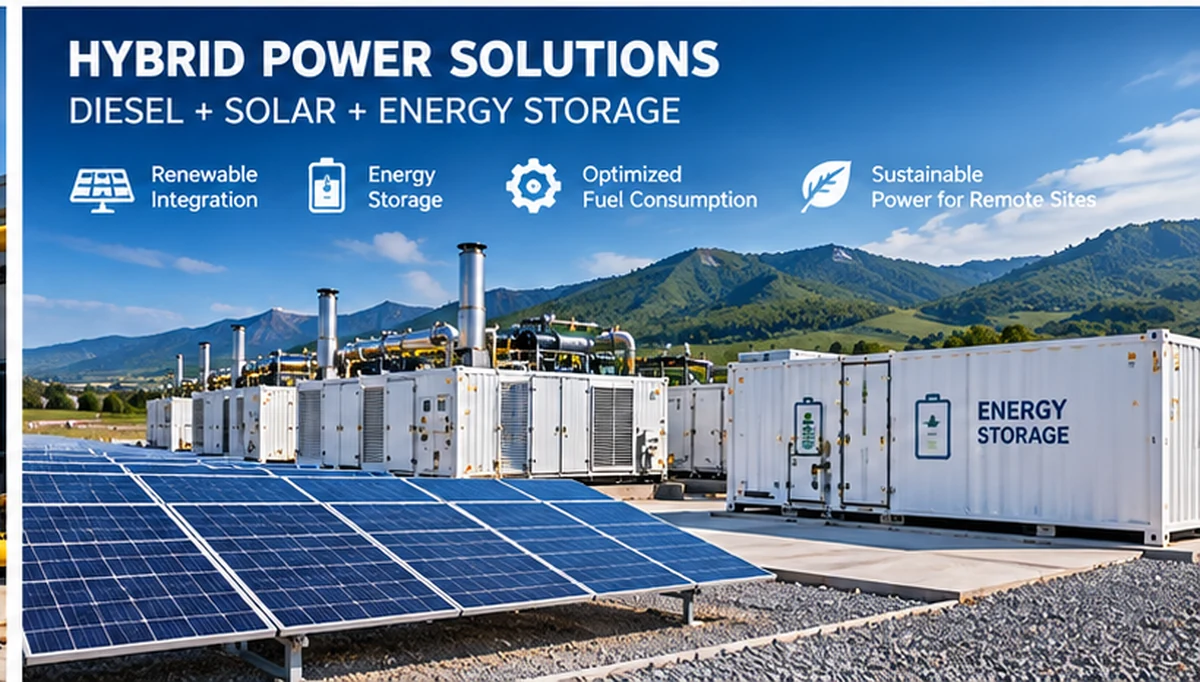
Energy storage and renewable energy integration are changing how industrial power systems are designed.
Traditional generator installations rely primarily on diesel or gas equipment.
Hybrid systems can combine different energy technologies, including:
-
Diesel or natural gas generators
-
Solar photovoltaic systems
-
Battery energy storage systems
-
Energy management controllers
The purpose is to match available generating resources to actual electricity demand.
Why Hybrid Power Is Important
For remote industrial facilities, generators sometimes operate under variable electrical loads.
A properly engineered battery storage system may help manage short-term load changes and reduce unnecessary generator operation.
Solar generation may also reduce fuel consumption during periods of suitable sunlight.
However, the financial and environmental benefits depend on system design and actual operating conditions.
Hybrid generation should therefore be evaluated using realistic load profiles, equipment costs, fuel consumption data, and expected service life.
Applications with Potential
Hybrid generator systems may be attractive for:
-
Remote telecommunications facilities
-
Mining operations
-
Temporary construction power
-
Off-grid industrial facilities
-
Island and remote community power
-
Industrial sites with significant renewable energy resources
Industry research published in 2026 identifies hybridization as one of the major forces transforming the generator set market.
2027 Outlook: Hybrid solutions could become an increasingly important product category, particularly for projects seeking lower fuel consumption and greater operational flexibility.
7. Digital Monitoring and Intelligent Generator Controls Will Gain Importance
Generator technology is moving beyond purely mechanical equipment.
Modern industrial users increasingly need greater visibility into equipment performance.
Remote generator monitoring can help operators review:
-
Engine operating hours
-
Electrical output and loading
-
Voltage and frequency
-
Fuel consumption and tank levels where monitored
-
Engine temperature and pressure
-
Fault alarms
-
Maintenance requirements
The Value of Connected Generator Systems
For industrial facilities operating multiple generators, centralized monitoring may improve operational management.
For equipment distributors and service providers, connected generators can support better maintenance scheduling and customer service.
However, remote access also creates cybersecurity responsibilities.
Customers should evaluate communication security, access controls, software support, and compatibility with existing control platforms.
2027 Outlook: Intelligent control and monitoring capability is likely to become an increasingly important equipment selection factor, especially in complex industrial and multi-generator installations.
8. Regional Generator Set Market Outlook for 2027
Generator demand will differ significantly across international markets.
Electricity infrastructure, fuel availability, industrial development, and regulatory requirements vary by region.
| Region | Important Demand Drivers | Generator Opportunities |
|---|---|---|
| North America | Data centers, critical facilities, industrial expansion | Large standby diesel systems, gas power |
| Southeast Asia | Manufacturing, electricity demand growth, infrastructure | Industrial diesel, gas, hybrid systems |
| Middle East | Oil and gas, industrial projects, infrastructure | Gas generators, containerized systems |
| Africa | Remote power, mining, infrastructure | Diesel prime power, hybrid generation |
| Latin America | Mining, agriculture, industrial power | Diesel and gas generators |
| Europe | Critical power, infrastructure resilience, emissions compliance | Efficient backup and integrated systems |
These are directional market assessments, not country-specific generator sales forecasts.
North America: Data Center Infrastructure
The United States remains an important market for high-capacity industrial power systems.
Rapid investment in digital infrastructure is supporting interest in both emergency standby power and certain on-site generation applications.
For international suppliers, technical compliance, equipment reliability, project references, and local service support are essential.
Southeast Asia: Industrial Electricity Growth
The IEA's 2026 ASEAN Energy Security Review projects Southeast Asian electricity demand to increase by approximately 5.4% annually between 2026 and 2030.
Industrial development, air conditioning, data centers, and electrification are important contributors.
Indonesia and Vietnam are expected to account for substantial shares of regional electricity demand growth.
This creates opportunities for power system suppliers serving manufacturing facilities, infrastructure projects, and industrial developers.
Middle East: Industrial and Oil and Gas Applications
Oil and gas facilities, petrochemical projects, and remote industrial operations continue to require dependable electricity infrastructure.
Natural gas systems may be attractive where suitable fuel supplies exist.
Diesel generator sets also remain relevant for standby power, temporary projects, and remote sites.
Africa: Remote and Independent Power
Mining, construction, and infrastructure projects can create demand for prime and standby power systems.
For some remote applications, containerized diesel or hybrid generator solutions may offer practical benefits.
Project economics and fuel logistics remain critical selection factors.
Europe: Reliability and Compliance
European buyers are likely to continue emphasizing fuel efficiency, noise reduction, emissions compliance, and system reliability.
Equipment suppliers should confirm requirements for each country and application rather than assuming one generator specification will satisfy every market.
9. What Could Limit Generator Market Growth in 2027?
Although the overall outlook is positive, several risks deserve attention.
Fuel Price Volatility
Diesel and natural gas price movements can substantially affect project operating costs and purchasing decisions.
Emissions and Permitting Requirements
Local environmental rules may influence generator selection, installation approval, and operating hours.
Supply Chain Constraints
Long lead times for engines, alternators, switchgear, and specialized electrical components may delay certain power projects.
Project Financing
Some data center and infrastructure developments may be postponed or redesigned if financing becomes more expensive or expected returns weaken.
Growing Competition
International generator suppliers face competitive pressure on price, product performance, customization, and after-sales support.
Forecast interpretation: These factors mean the 2027 generator set market could grow more slowly or more quickly than long-term industry projections suggest.
No single forecast should be treated as guaranteed market performance.
10. What Should Generator Buyers Prioritize in 2027?
For industrial buyers planning new generating capacity, the most important priority is selecting equipment that matches the actual project requirements.
Before requesting a quotation, evaluate:
-
Required Capacity: Determine generating capacity in kW and kVA, including expected load growth.
-
Operating Duty: Confirm standby, prime, or continuous power requirements.
-
Fuel Strategy: Compare diesel, natural gas, and hybrid options based on local availability and cost.
-
System Configuration: Evaluate open-type, silent, containerized, or multi-generator designs.
-
Electrical Requirements: Specify voltage, frequency, synchronization, ATS, and protection.
-
Operating Costs: Compare fuel consumption, maintenance, spare parts, and expected equipment life.
-
Compliance and Service: Confirm applicable standards, service availability, and project documentation.
These requirements are particularly important for large industrial installations where equipment selection affects long-term operating performance.
11. FORYOU POWER: Industrial Generator Solutions for 2027 Projects
As global electricity requirements evolve, industrial buyers need dependable equipment and flexible generating configurations.
FORYOU POWER provides diesel generator sets, natural gas generators, and customized industrial power generation solutions for international customers.
Our product portfolio includes:
-
Industrial diesel generator sets
-
Natural gas generator systems
-
Silent and containerized generators
-
Multi-generator power solutions
-
Solar-diesel hybrid generator solutions
-
Customized power generation configurations
We support customers evaluating electricity supply requirements for manufacturing, mining, oil and gas, construction, and other industrial applications.
Explore Our Power Solutions
Silent and Containerized Generators
Oil and Gas Power Applications
Frequently Asked Questions
Will the generator set market grow in 2027?
Current long-term market research indicates continued generator set industry growth. However, the exact 2027 outcome will depend on industrial investment, data center construction, fuel prices, and economic conditions.
Will diesel generators still be widely used in 2027?
Diesel generators are expected to remain important for emergency backup, industrial power, and remote applications because of their established technology, fuel storage flexibility, and broad availability.
Are natural gas generators becoming more popular?
Natural gas generation is attracting increased investment in certain industrial and distributed power applications. Adoption depends heavily on fuel availability, operating costs, and project requirements.
What are the most promising generator technologies for 2027?
High-reliability diesel generators, natural gas generator sets, modular power systems, hybrid generation, and intelligent monitoring technologies all offer potential opportunities.
Which regions offer opportunities for generator exporters?
North America, Southeast Asia, the Middle East, Africa, and Latin America present different opportunities. The best market depends on product specifications, pricing, regulatory compliance, and local distribution capabilities.
Conclusion: Generator Set Industry Outlook for 2027
The global generator set market is entering 2027 with opportunities driven by electricity demand growth, critical power requirements, industrial infrastructure, and changing energy technologies.
Diesel generators are expected to maintain an important role in dependable backup and industrial power.
Natural gas generators may continue gaining ground in selected distributed and prime power applications.
Containerized systems, hybrid energy solutions, and intelligent controls are also likely to influence purchasing decisions.
For manufacturers and suppliers, success will increasingly depend on providing reliable equipment, suitable engineering solutions, competitive operating costs, and responsive technical support.
For industrial buyers, choosing the right generator system will remain a critical investment decision.
Planning a Power Generation Project in 2027?
Contact FORYOU POWER to discuss your required capacity, fuel preference, voltage, frequency, operating conditions, and project location.
FUJIAN FORYOU POWER TECH CO., LTD.
Website: https://foryougen.com
Email: info@foryougen.com
Request a Generator Set Quotation
Industry Sources and References
Editorial Note: This article is a forward-looking industry analysis prepared in October 2026. The figures attributed to research organizations are third-party forecasts, and FORYOU POWER's market assessments are analytical judgments, not guaranteed future results.
9 Positive Signals for the Generator Set Market in 2027–2031: Sales Data, Global Power Demand and Industry Opportunities
Foryou Power at VIEEXPO 2026 – Power Solutions for Global Markets