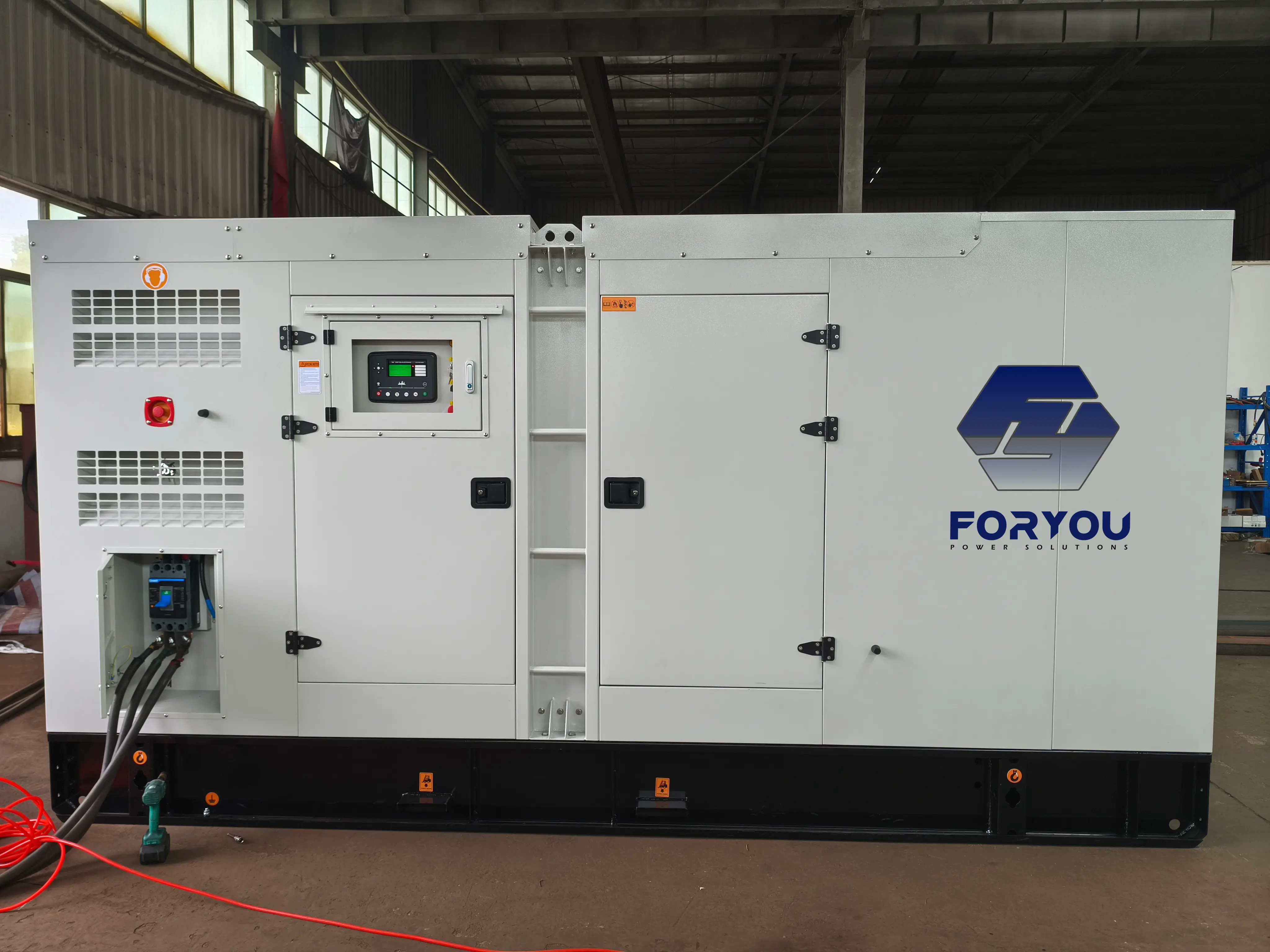
9 Positive Signals for the Generator Set Market in 2027–2031: Sales Data, Global Power Demand and Industry Opportunities
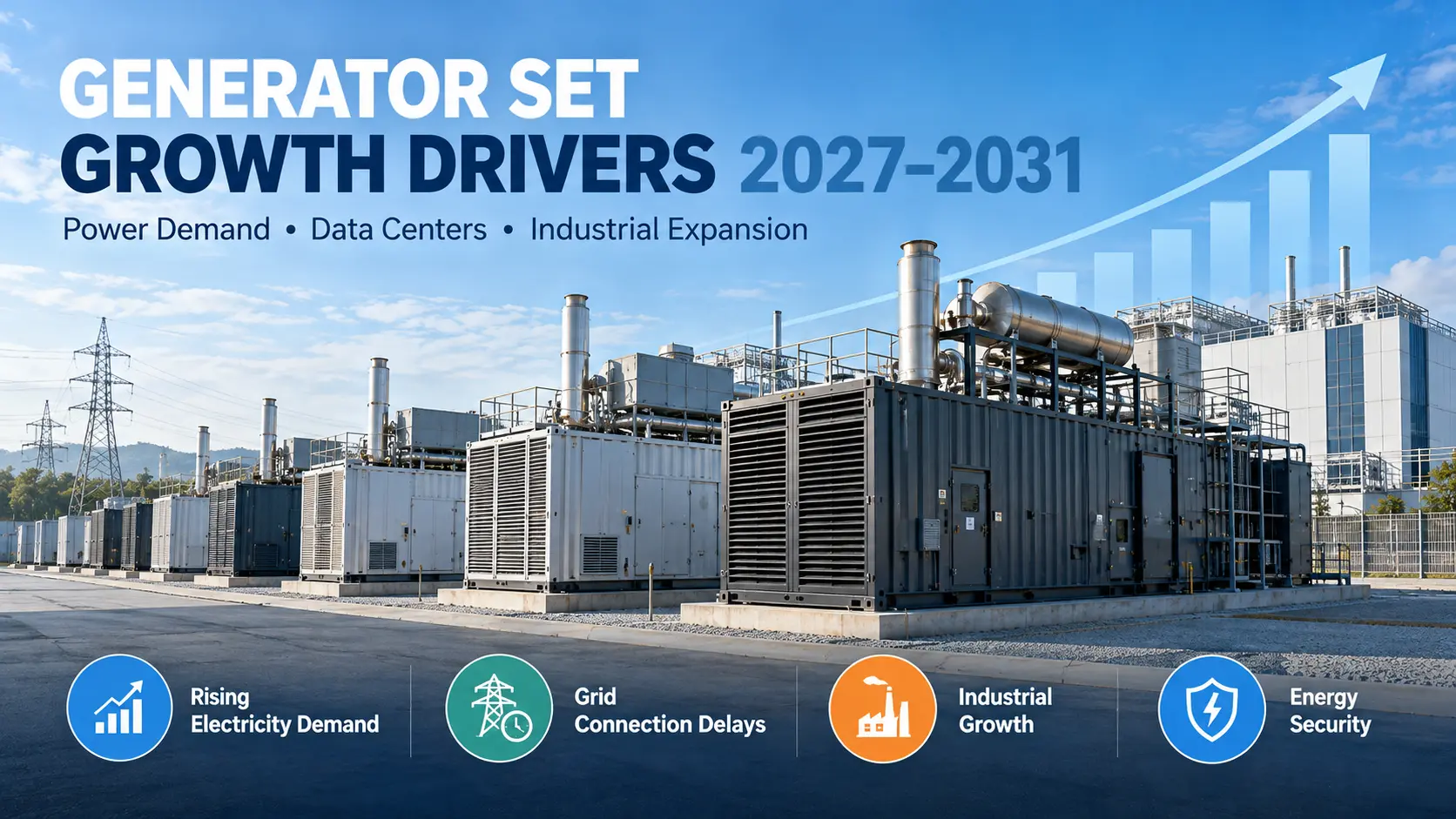
9 Positive Signals for the Generator Set Market in 2027–2031: Sales Data, Global Power Demand and Industry Opportunities
Published: October 25, 2026 | FORYOU POWER Industry Research
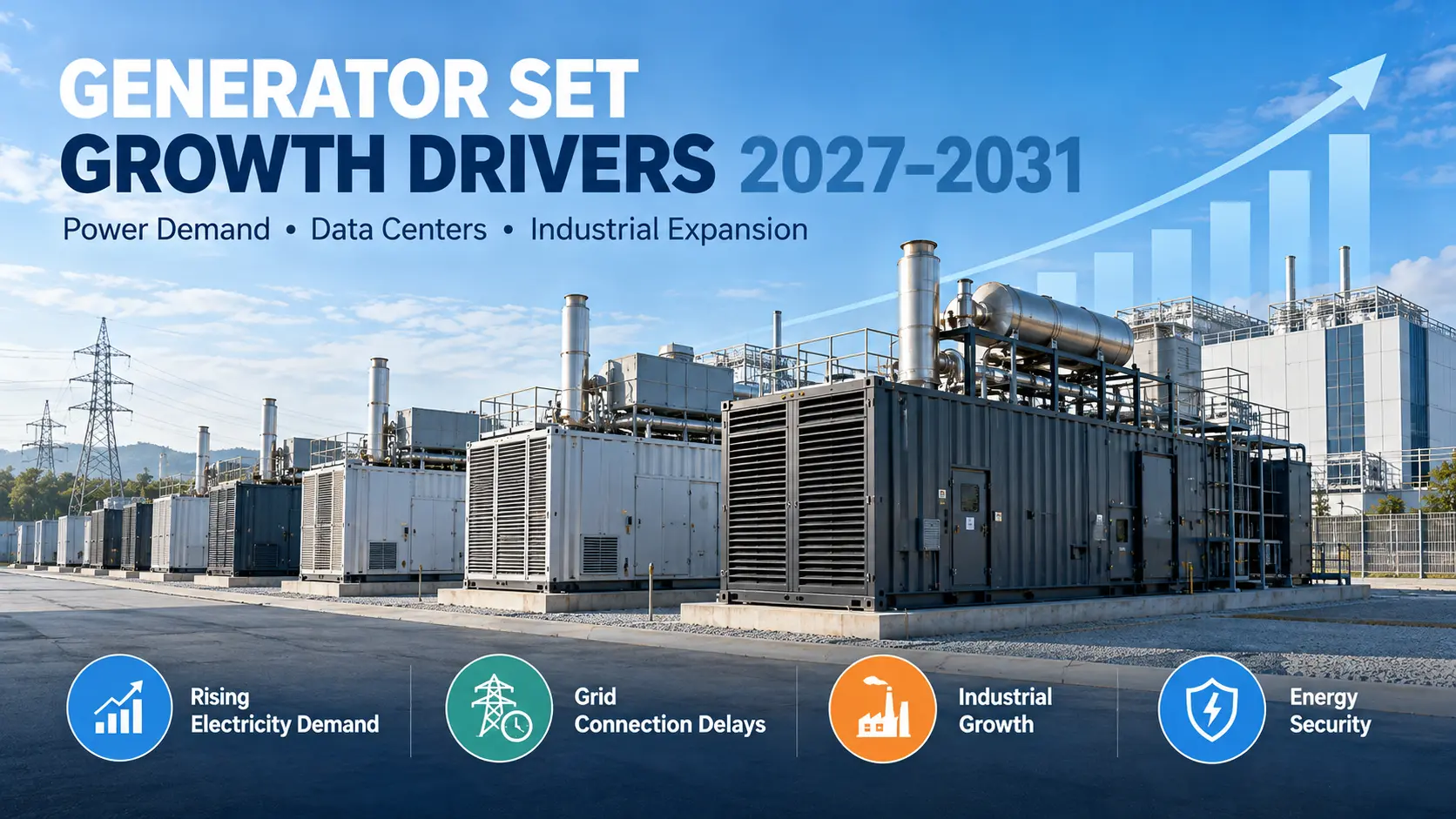
The global generator set market is entering a new growth phase as electricity demand, industrial investment, artificial intelligence, and energy security reshape the power generation industry.
Over the past several years, major power equipment manufacturers have reported significant growth in their power generation businesses. At the same time, electricity infrastructure is struggling to keep pace with demand in some markets.
For diesel generator manufacturers, natural gas generator suppliers, industrial distributors, and engineering contractors, the next five years could present important opportunities.
However, this growth will not be equally distributed across every generator category.
Some traditional markets will face stronger competition from battery storage and renewable energy, while high-capacity backup systems, modular power plants, industrial prime power, and integrated power solutions may become increasingly valuable.
What are the strongest positive signals for the generator set industry from 2027 to 2031?
This report examines actual manufacturer sales, international electricity forecasts, infrastructure investment, and nine major drivers that could shape future generator demand.
1. Historical Generator Sales Show a Strong Industrial Demand Trend
Recent financial results provide useful evidence of changing market conditions.
Cummins: Power Generation Sales Continue to Expand
According to Cummins' annual reports, sales within the Power Systems segment's power generation product line developed as follows:
| Year | Reported Power Generation Sales |
|---|---|
| 2022 | USD 2.79 billion |
| 2023 | USD 3.34 billion |
| 2024 | USD 3.99 billion |
| 2025 | USD 4.73 billion |
This represents an increase of approximately 70% between 2022 and 2025.
The figures include intersegment sales and should not be interpreted as global generator market revenue or the number of generator sets shipped.
Nevertheless, the sustained growth indicates strong demand for power generation equipment and related technologies.
Caterpillar: Significant Growth in 2025
Caterpillar reported approximately USD 10.28 billion in power generation application sales during 2025, compared with USD 7.76 billion in 2024.
That represents growth of approximately 32%.
The company has also identified increasing demand from data center infrastructure and prime power applications.
Generac: Different Generator Segments Are Performing Differently
Generac's commercial and industrial product sales increased from approximately USD 1.39 billion in 2024 to USD 1.46 billion in 2025.
However, the company's residential product sales declined in the same period.
This contrast is important.
The generator industry's future growth is likely to depend increasingly on the right applications, product configurations, and customer segments—not simply overall generator demand.
These manufacturer results are not directly comparable because each company uses different financial reporting classifications.
Sources: Cummins Annual Reports, Caterpillar 2025 Annual Report, and Generac 2025 Form 10-K.
2. Positive Signal One: Global Electricity Demand Will Continue Growing
The first major growth driver is the worldwide expansion of electricity consumption.
The International Energy Agency's 2026 electricity outlook forecasts average annual global electricity demand growth of approximately 3.6% from 2026 through 2030.
Its July 2026 update projects growth of 3.8% in 2027.
This demand comes from several major areas:
-
Industrial manufacturing and electrification
-
Artificial intelligence and data centers
-
Electric vehicles and charging infrastructure
-
Air conditioning and cooling
-
Commercial infrastructure
-
Population growth and economic development
Electricity is becoming more important to modern economies.
How Does This Benefit Generator Manufacturers?
Higher electricity consumption increases the importance of dependable power infrastructure.
Industrial facilities cannot always wait for new utility infrastructure to become available.
In certain circumstances, generator sets can support temporary electricity supply, emergency backup, and independent industrial power generation.
However, grid-connected generation, renewable electricity, and energy storage will also meet much of this demand.
2027–2031 Opportunity: Industrial diesel generators, natural gas generator systems, and standby power equipment may benefit where growing electricity demand creates requirements for reliability, flexibility, or independent supply.
Source: IEA Electricity 2026.
3. Positive Signal Two: AI Data Centers Are Creating New High-Capacity Generator Demand
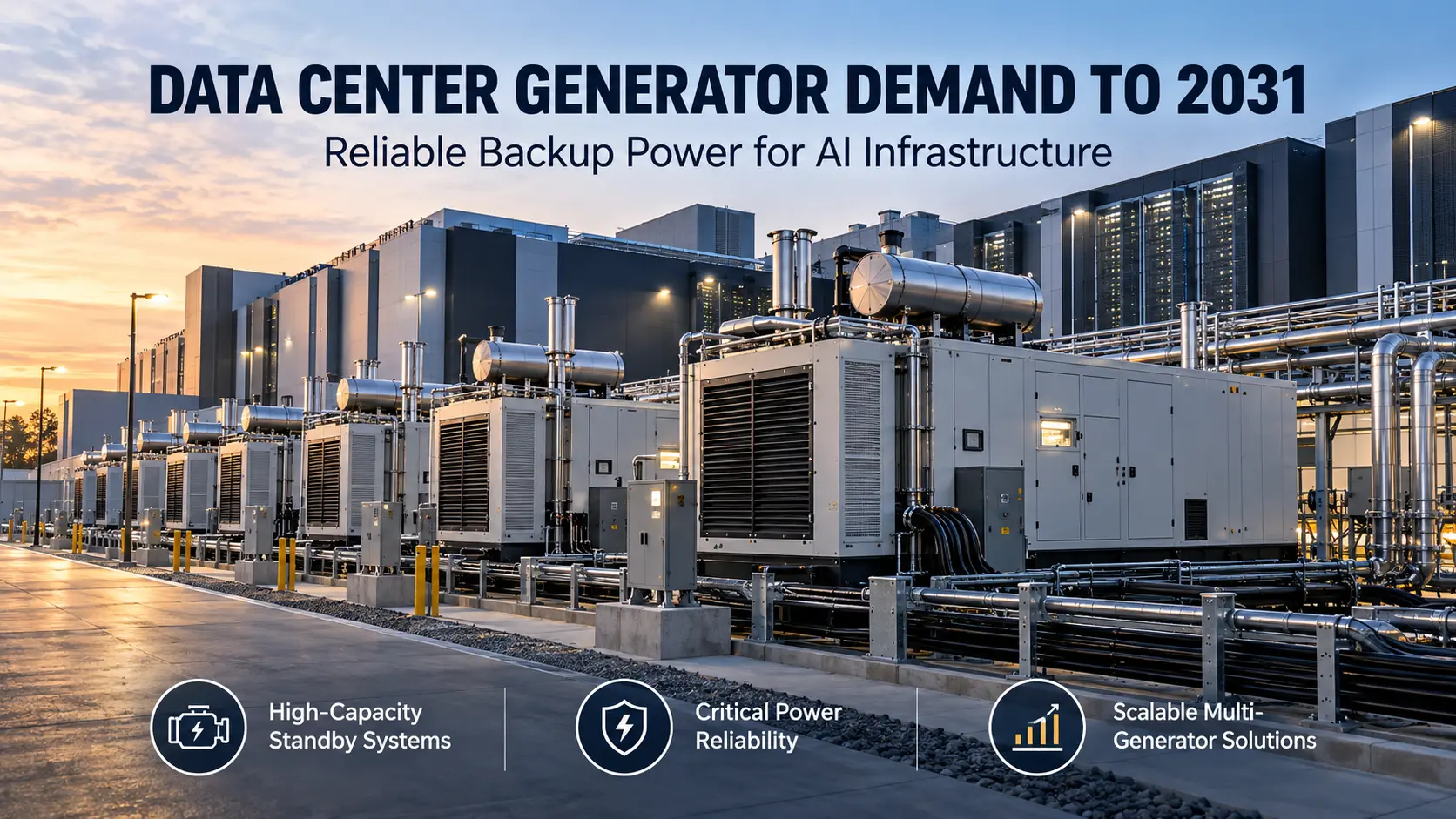
Artificial intelligence represents one of the strongest new sources of electricity demand.
According to the IEA's April 2026 assessment, global data center electricity consumption could increase from approximately 485 TWh in 2025 to 950 TWh in 2030.
AI-focused data centers are expected to grow even more rapidly.
This trend matters because advanced data centers require highly reliable electrical infrastructure.
Power disruptions can affect digital services, computing operations, customer contracts, and business continuity.
A Major Generator Supply Agreement
In September 2026, Amazon and Generac signed a long-term agreement covering backup power generators for Amazon data centers.
The agreement includes expected initial deliveries worth approximately USD 2.4 billion in 2027 and 2028.
This is evidence that large infrastructure operators are making substantial commitments to backup generation.
Which Generator Products Could Benefit?
Data center projects may create demand for:
-
High-capacity diesel backup generators
-
Natural gas on-site generation systems
-
Multiple synchronized generator sets
-
Automatic transfer and electrical protection equipment
-
Advanced monitoring and control systems
-
Integrated battery and generator power solutions
Data center projects have demanding technical requirements, including load acceptance, redundancy, emissions compliance, control integration, and service availability.
Not every industrial generator supplier is automatically qualified for these applications.
2027–2031 Opportunity: Large backup generators and engineered multi-generator power systems could experience growing demand, particularly where data center investment and utility connection constraints overlap.
Sources: IEA Key Questions on Energy and AI and Generac SEC Filing.
4. Positive Signal Three: Grid Connection Delays Are Encouraging On-Site Power Generation
Electricity demand is growing faster than grid infrastructure can expand in some markets.
According to the IEA, more than 2,500 GW of renewable energy, energy storage, and large electricity-consuming projects are waiting in grid connection queues worldwide.
This figure refers to a mixed pipeline of proposed projects, not an equivalent amount of generator demand or a measured electricity shortage.
Nevertheless, it highlights a major infrastructure bottleneck.
The IEA estimates that planning, permitting, and building new grid infrastructure can take five to fifteen years, depending on the project.
By comparison, certain industrial facilities and data centers can be developed much more quickly.
Why This Creates Opportunities
Some industrial operators may evaluate on-site electricity generation when a full utility connection is unavailable or delayed.
Possible solutions include:
Temporary Power
Mobile or containerized generators can support certain projects during construction or commissioning.
Industrial Prime Power
Dedicated gas or diesel generators may support operations requiring extended electricity supply.
Distributed Generation
Multiple generator units can be installed close to major electricity loads.
Hybrid Power
Generator systems can operate alongside solar power and battery storage where technically and economically suitable.
These opportunities depend on local regulations, emissions permits, fuel availability, and project economics.
Importantly, generators should not be treated as a universal substitute for grid investment.
2027–2031 Opportunity: Suppliers offering modular, transportable, and engineered on-site power solutions may benefit from projects facing grid connection delays.
Source: IEA Electricity 2026 — Grids.
5. Positive Signal Four: Industrialization and Manufacturing Expansion Will Support Generator Demand
Industrial electricity requirements are expected to remain a major demand driver.
Manufacturing facilities need electricity for production equipment, processing systems, automation, cooling, and material handling.
As industrial investment expands, power supply reliability becomes increasingly important.
Southeast Asia Is a Market to Watch
The IEA expects electricity demand across ASEAN member states to grow by approximately 5.4% annually from 2026 to 2030.
Indonesia and Vietnam are expected to account for substantial portions of the regional increase.
Manufacturing investment, cooling requirements, data centers, and broader electrification are important drivers.
For generator suppliers, Southeast Asia may provide opportunities involving:
-
Factory backup power
-
Industrial diesel generator sets
-
Commercial power systems
-
Construction site generators
-
Gas-powered industrial installations
-
Customized generator configurations
However, electricity demand growth should not be confused with generator sales growth. Grid investment, industrial policy, renewable energy, and other technologies will influence actual equipment purchases.
Other Industrial Markets
Manufacturing development, resource processing, logistics facilities, and industrial infrastructure can also generate equipment requirements in the Middle East, Africa, and Latin America.
2027–2031 Opportunity: Industrial generator suppliers with competitive equipment, appropriate electrical specifications, and local distribution support may find opportunities in developing manufacturing markets.
Source: IEA ASEAN Energy Security Review.
6. Positive Signal Five: Energy Security and Extreme Weather Are Raising the Value of Backup Power
Power supply security is becoming a strategic issue for businesses and governments.
Major electricity interruptions can affect hospitals, transportation systems, telecommunications, factories, and public infrastructure.
The IEA documented significant power outages during 2025 involving electrical system failures, voltage instability, and extreme weather events.
Examples included widespread disruptions in parts of Europe, Latin America, Asia, and North America.
Why Backup Power Matters
For a factory, a power outage may interrupt production and damage equipment.
For a hospital, loss of essential electrical supply can create serious safety risks.
For telecommunications infrastructure, power failures can interrupt critical communications.
For data centers, electricity reliability is fundamental to service continuity.
These applications may require engineered emergency power systems combining generators, switching equipment, UPS, and other technologies.
The Business Opportunity
Backup generation may increasingly be evaluated as part of wider business continuity and infrastructure resilience planning.
Buyers may prioritize:
-
Automatic starting and transfer systems
-
Reliable standby capacity
-
Fuel storage and supply security
-
Preventive maintenance
-
Multiple-unit redundancy
-
Remote monitoring and alarm systems
2027–2031 Opportunity: High-reliability backup systems may remain important for critical infrastructure, commercial facilities, and industrial customers.
Source: IEA Electricity 2026 — Reliability.
7. Positive Signal Six: Mining, Critical Minerals and Remote Infrastructure Need Independent Power
Many mining and resource development projects are located far from established electricity infrastructure.
Mining operations require power for:
-
Mineral extraction and processing
-
Conveyors and crushing equipment
-
Pumps and ventilation
-
Water treatment
-
Workshops and site facilities
-
Communications and monitoring
The IEA's 2026 critical minerals outlook expects strong long-term demand growth for minerals used in energy infrastructure, electricity networks, batteries, and electric vehicles.
Copper, lithium, nickel, and other minerals remain strategically important.
However, mineral prices and investment activity can be cyclical. Strong future mineral demand does not guarantee that every mining project will proceed.
Why Generator Sets Are Relevant
Remote facilities may rely on independent diesel or natural gas generation when a utility connection is unavailable.
For these projects, containerized power systems can offer practical benefits in transportation, installation planning, and maintenance.
Multiple synchronized generator units may also provide greater operational flexibility.
Natural gas generation can be particularly relevant for certain oil and gas operations where suitable fuel is available.
2027–2031 Opportunity: Remote mining, oil and gas, and infrastructure projects may continue to create demand for prime power and containerized generator systems.
Source: IEA Global Critical Minerals Outlook 2026.
8. Positive Signal Seven: Natural Gas Generators Are Expanding Beyond Traditional Applications
Natural gas power generation is attracting greater interest in industrial and distributed electricity systems.
Gas generator sets can be useful for prime power applications where a dependable gas supply is available.
Potential applications include:
-
Industrial power plants
-
Oil and gas processing facilities
-
Remote resource projects
-
Behind-the-meter data center power
-
Commercial distributed generation
-
Combined heat and power systems
Unlike emergency standby generators, prime power systems may operate for extended periods.
For those applications, fuel economics and operating efficiency become especially important.
Why Gas Generation Could Grow
Natural gas systems can be considered where:
-
Pipeline gas is readily available
-
Long operating hours justify the investment
-
Fuel costs are competitive
-
Modular generation is required
-
Local emissions rules allow the installation
However, natural gas is not automatically lower-cost or lower-emission in every application.
Methane leakage, gas supply disruptions, local fuel pricing, engine efficiency, and regulatory requirements must be considered.
Market Implications
The opportunity is not limited to individual gas generator sets.
Customers may require complete systems incorporating:
-
Multiple gas engines
-
Electrical synchronization
-
Gas treatment and pressure regulation
-
Cooling and exhaust equipment
-
Containerized enclosures
-
Power management controls
2027–2031 Opportunity: Integrated natural gas power systems may gain commercial importance in projects requiring distributed or continuous generation.
9. Positive Signal Eight: Hybrid Power Systems Will Create New Generator Applications
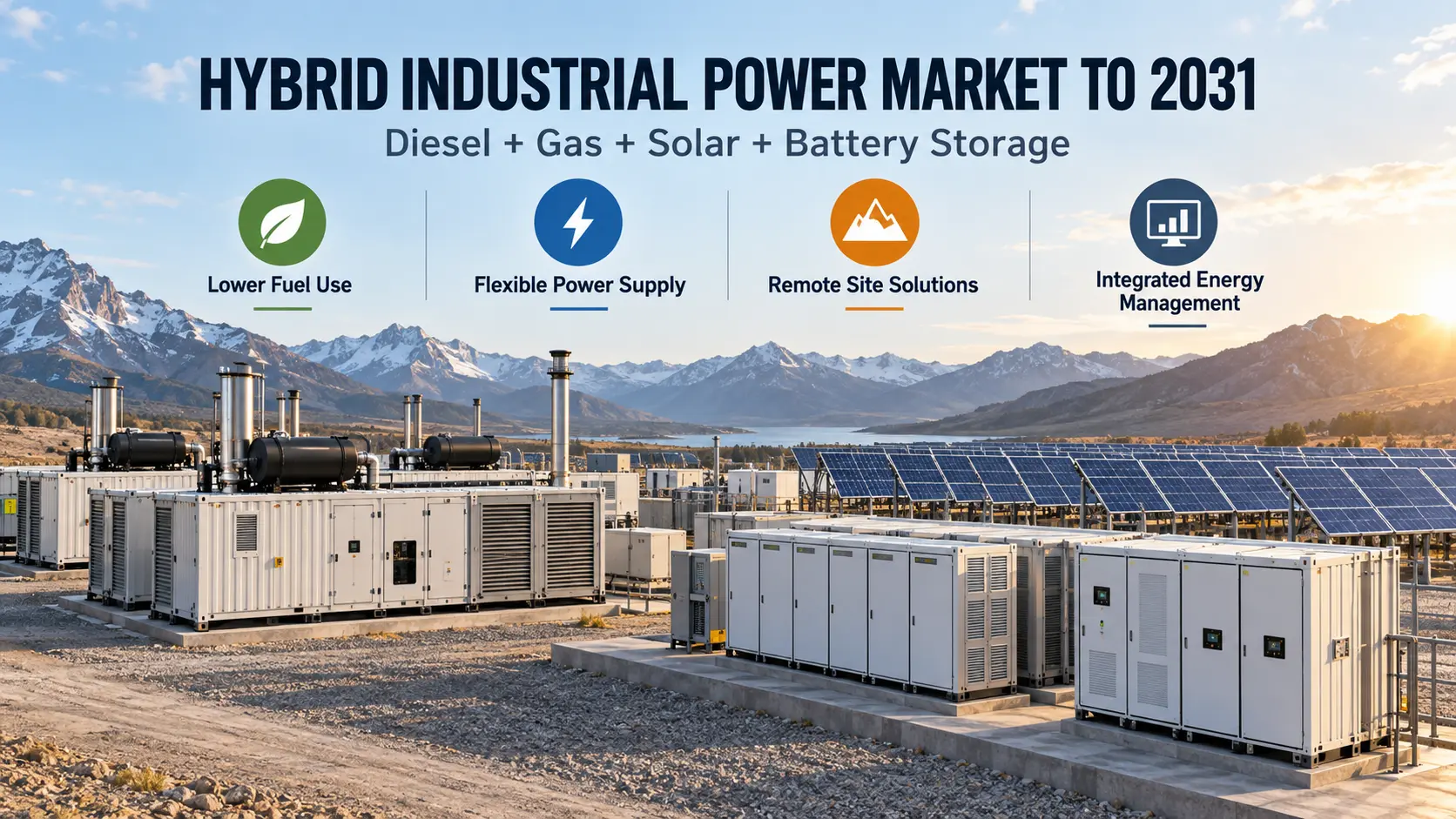
Renewable energy and battery storage are transforming power generation.
The IEA reports that approximately 108 GW of new battery storage capacity was deployed globally in 2025, demonstrating the speed at which storage technology is expanding.
This development creates both competition and opportunity for conventional generators.
Battery systems can replace generator operation in certain short-duration applications.
However, batteries and generators can also be integrated into hybrid power systems.
How Hybrid Systems Work
A typical industrial hybrid solution may combine:
-
Diesel generators
-
Solar photovoltaic panels
-
Battery energy storage
-
An energy management system
Depending on project conditions, such an arrangement can reduce generator operating hours and improve load management.
For some remote applications, solar power and batteries can reduce fuel consumption while generators provide electricity during low renewable output or prolonged demand.
A New Market for Generator Suppliers
The industry is moving toward integrated power solutions rather than relying solely on individual generating units.
Generator manufacturers and distributors may find opportunities in equipment integration, control systems, commissioning, and technical services.
2027–2031 Opportunity: Suppliers capable of supporting diesel-solar-battery or gas-battery hybrid configurations may benefit from growing interest in flexible industrial power systems.
Source: IEA Global Energy Review 2026 — Battery Storage.
10. Positive Signal Nine: Digital Controls, Maintenance and Generator Modernization Will Support Long-Term Business
New equipment sales represent only one part of the generator industry.
Installed generators also require maintenance, control systems, spare parts, repairs, and eventual replacement.
As generator systems become more complex, industrial customers increasingly value operational visibility and service support.
Digital Monitoring
Modern generator controllers can provide information on:
-
Running hours
-
Electrical output
-
Voltage and frequency
-
Engine temperatures and pressures
-
Fault alarms
-
Maintenance requirements
-
System status and load sharing
Remote monitoring can help operators manage large generator fleets and improve maintenance planning.
Generator Modernization
Depending on equipment condition and technical feasibility, existing installations may require:
-
Controller upgrades
-
Synchronization system improvements
-
Electrical protection modernization
-
Alternator refurbishment
-
Cooling system improvements
-
Emissions-related modifications
Equipment replacement remains necessary where older generators no longer meet operational or regulatory requirements.
The Commercial Opportunity
For suppliers, value increasingly extends beyond the initial generator sale.
Long-term opportunities may include spare parts, maintenance agreements, system upgrades, and technical support.
2027–2031 Opportunity: Connected generator systems and aftermarket services could provide additional revenue opportunities, especially for companies with established customer relationships and service networks.
11. Which Generator Market Segments Could Benefit Most?
Based on historical manufacturer performance and projected electricity requirements, the following sectors deserve attention.
| Market Segment | Main Demand Driver | Five-Year Outlook |
|---|---|---|
| Large diesel backup generators | Data centers and critical infrastructure | Favorable, subject to technical qualification |
| Industrial diesel generators | Manufacturing and power reliability | Favorable |
| Natural gas generator sets | On-site and distributed generation | Favorable where fuel economics work |
| Containerized power systems | Mining, oil and gas, temporary power | Favorable |
| Hybrid generator systems | Fuel savings and energy flexibility | Emerging opportunity |
| Generator controllers and monitoring | Operational efficiency and modernization | Favorable |
| Maintenance and spare parts | Existing installed generator fleets | Recurring demand |
| Small portable generators | Weather, household backup and local demand | More cyclical and competitive |
These assessments are qualitative industry judgments, not guaranteed growth rankings.
12. Regional Opportunities from 2027 to 2031
Different geographic markets will require different product strategies.
North America
Data center investment, industrial development, and critical power systems may support demand for large generator installations.
Technical certification, emissions compliance, and local service capabilities are important barriers to entry.
Southeast Asia
Manufacturing development and growing electricity requirements may support industrial diesel and gas generator demand.
Products should be matched to local voltage, frequency, environmental conditions, and project budgets.
Middle East
Oil and gas operations, industrial expansion, and infrastructure development may create demand for gas generators, high-capacity diesel systems, and containerized power solutions.
High-temperature operation and local technical requirements are important considerations.
Africa
Industrial electrification, remote infrastructure, and mining activity may create opportunities for independent power systems.
According to the IEA, approximately 600 million people in Africa still lacked electricity access in its 2025 assessment.
However, the long-term solution for electricity access requires an appropriate mix of grid expansion, mini-grids, renewable energy, storage, and other technologies—not diesel generators alone.
Latin America
Mining, agricultural processing, industrial development, and remote infrastructure may support generator demand.
Fuel logistics, maintenance accessibility, and local distribution partnerships are important commercial factors.
13. What Could Prevent the Generator Market from Growing as Expected?
A positive industry outlook does not eliminate significant risks.
First, battery energy storage is becoming more competitive. Some short-duration backup and peak-demand applications may increasingly use storage instead of conventional generators.
Second, emissions regulations could restrict diesel operation. Requirements vary widely across countries, states, and applications.
Third, fuel prices remain uncertain. High diesel or natural gas costs can affect the economics of prime power projects.
Fourth, large data center projects are subject to financing and construction risks. Not every announced project will reach completion.
Fifth, geopolitical developments and trade restrictions may affect equipment availability, pricing, and delivery times.
Finally, growing competition may reduce supplier margins even when industry demand increases.
Successful manufacturers will need to differentiate through technical capability, quality, delivery reliability, and customer service.
14. Five-Year Outlook: What May Happen Between 2027 and 2031?
2027–2028: Project Delivery and Infrastructure Expansion
Expected generator deliveries for major data center projects, growing industrial electricity demand, and grid connection challenges could support equipment purchasing.
The strongest opportunities may involve high-capacity backup systems, industrial prime power, and containerized generator configurations.
2029–2030: Greater Focus on Integrated Power Systems
As renewable generation and battery storage expand, generator systems may increasingly be evaluated as part of integrated electricity solutions.
Fuel efficiency, intelligent controls, emissions requirements, and power management could become more important purchasing criteria.
2031: Competition Based on Complete Power Solutions
By 2031, generator suppliers may face a more sophisticated market in which customers evaluate complete lifecycle costs and overall electrical system performance.
Equipment reliability, integration capability, service support, and project engineering could become stronger competitive differentiators.
These stages describe possible market development, not a guaranteed annual sequence.
15. How Should Industrial Generator Buyers Prepare?
For buyers planning power projects between 2027 and 2031, generator selection should begin with an assessment of actual operational requirements.
Important questions include:
-
What is the required generating capacity in kW and kVA?
-
Is the system intended for standby, prime, or continuous operation?
-
Is diesel, natural gas, or a hybrid configuration appropriate?
-
What are the required voltage and frequency?
-
Will the project require containerized installation or synchronized units?
-
What operating costs and maintenance requirements are acceptable?
-
Are there special emissions, environmental, or redundancy requirements?
A clearly defined technical specification helps manufacturers recommend suitable equipment and prepare accurate quotations.
16. FORYOU POWER: Generator Solutions for the Next Five Years
As electricity requirements evolve, industrial buyers need reliable generating equipment and flexible power configurations.
FORYOU POWER provides diesel generator sets, natural gas generator systems, and customized industrial power solutions for international customers.
Our product offering includes:
-
Industrial diesel generator sets
-
Natural gas generators
-
Silent and containerized generator systems
-
Multi-generator power configurations
-
Hybrid diesel and energy storage solutions
-
Customized power generation equipment
We work with international customers to evaluate generating capacity, fuel requirements, operating conditions, and project specifications.
Explore our product solutions:
Silent and Containerized Generator Solutions
Frequently Asked Questions
Will the generator set market grow between 2027 and 2031?
Several industry forecasts indicate continued expansion, supported by electricity demand, data center investment, industrial development, and the need for backup power. Actual growth will depend on project execution, regulations, fuel economics, and competitive technologies.
What is the strongest growth driver for large generators?
AI data centers and critical infrastructure are important potential drivers for high-capacity backup generators. Grid connection constraints and industrial prime power requirements may also create opportunities.
Will diesel generators be replaced by battery storage?
Battery storage will increasingly compete in certain applications, particularly short-duration backup and energy management. However, diesel generators may continue to provide value for extended backup operation, remote facilities, and applications requiring substantial stored energy.
Are natural gas generators a good business opportunity?
Natural gas generators may provide attractive opportunities where reliable fuel infrastructure, suitable operating hours, and competitive economics are available. Their suitability must be evaluated for each project.
Which generator products should distributors focus on?
Industrial diesel generators, natural gas systems, containerized solutions, advanced controls, and suitable hybrid configurations merit evaluation. The most appropriate product range depends on the distributor's target markets and service capabilities.
Conclusion: The Next Five Years Could Reshape the Generator Industry
The generator set market has several credible growth drivers for 2027–2031.
Recent manufacturer sales demonstrate substantial demand in important power generation categories.
Meanwhile, growing electricity consumption, AI data centers, grid infrastructure delays, industrial development, and energy security requirements are creating additional opportunities.
Natural gas generators, hybrid power systems, containerized solutions, and digital controls may also influence the industry's future.
However, rising market demand does not guarantee growth for every supplier.
The companies best positioned to benefit will be those that deliver suitable equipment, reliable engineering, competitive lifecycle costs, and dependable customer support.
The future of the generator industry is not simply about selling more generators. It is about delivering more reliable, flexible, and economically sustainable power solutions.
Planning an Industrial Power Project for 2027–2031?
FORYOU POWER can help you evaluate generator configurations for industrial backup, prime power, and customized applications.
Please share your required capacity, fuel preference, voltage, frequency, installation conditions, and project location.
FUJIAN FORYOU POWER TECH CO., LTD.
Website: https://foryougen.com
Email: info@foryougen.com
Contact FORYOU POWER for a Generator Quotation
Research Sources
Editorial Disclaimer: Historical manufacturer figures are drawn from company disclosures, and market projections are based on third-party research. The 2027–2031 business opportunities discussed in this article are forward-looking assessments, not guaranteed sales or financial forecasts.
280kW Cummins Silent Diesel Generator for South America | 60Hz STAMFORD PMG Power Solution
2027 Generator Set Market Outlook: 7 Trends Shaping Global Diesel, Gas and Hybrid Power Demand