3.6MW Containerized Natural Gas Power Plant for Oil & Gas Projects in Kazakhstan
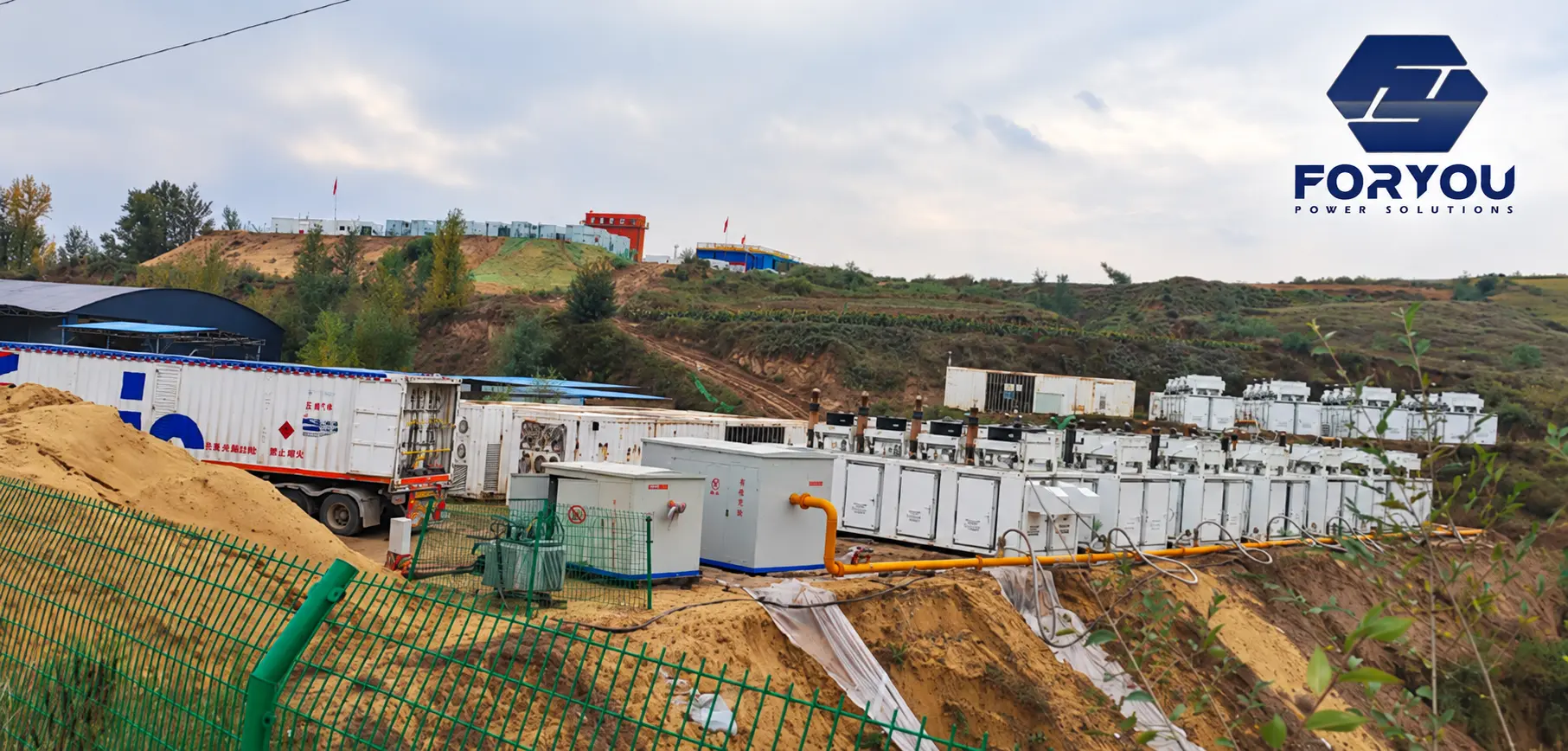
3.6MW Containerized Natural Gas Power Plant for Oil & Gas Projects in Kazakhstan
Project Case Study | FORYOU Power Solutions
3 × 1,200kW Containerized Systems | 12 Cummins Natural Gas Engines | Intelligent Parallel Control
Reliable Power Generation for Remote Oilfield Operations
Reliable electricity is essential to modern oil and gas production. From drilling equipment and pumping systems to processing facilities and auxiliary infrastructure, oilfield operations require a dependable power supply to maintain productivity and reduce unplanned interruptions.
However, many oilfields in Kazakhstan and other parts of Central Asia are located in remote areas where conventional grid infrastructure may be limited or unavailable.
To address these challenges, Fujian FORYOU Power Tech Co., Ltd. has developed a customized 3.6MW containerized natural gas power plant solution for an oilfield project in Kazakhstan.
The solution combines Cummins natural gas engines, modular containerized generator systems, and intelligent generator control technology to provide a flexible power-generation platform for demanding industrial applications.
The same engineering concept can also be adapted for oil and gas projects in Russia and other regions with similar operating requirements.
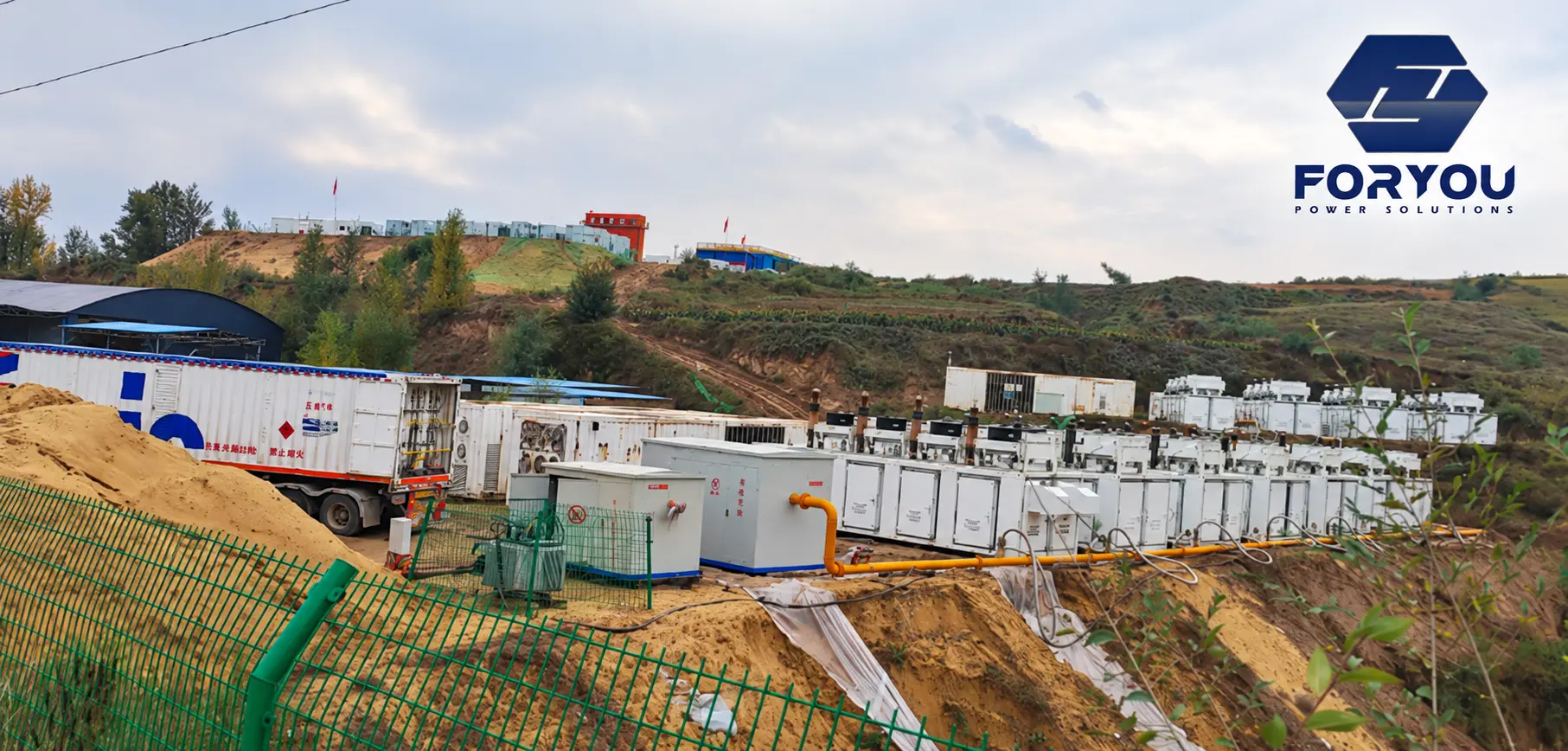
Project Overview: 3.6MW Natural Gas Power Solution
The project is designed around three independent 1,200kW containerized power-generation modules, providing a combined rated electrical capacity of 3,600kW.
Each 1,200kW module integrates four Cummins natural gas generator sets together with the required auxiliary equipment.
This configuration creates a modular power-generation system that can be arranged according to site load demands, operating conditions, and available installation space.
Main Project Specifications
| Parameter | Project Configuration |
|---|---|
| Project application | Oil & gas field power generation |
| Project location | Kazakhstan (KZ) |
| Solution provider | FORYOU Power |
| Total rated capacity | 3,600kW / 3.6MW |
| Power modules | 3 × 1,200kW |
| Gas engines per module | 4 Cummins natural gas engines |
| Total gas engines | 12 |
| Engine series | Cummins PC15NTAA (proposal specification) |
| Rated output voltage | 400/230V |
| Frequency | 50Hz |
| Generator arrangement | Multi-generator parallel operation |
| Control system | DEIF AGC 150 |
| Cooling system | Water-cooled, with container-mounted radiators |
| Fuel | Natural gas meeting engine specifications |
| Installation type | Containerized outdoor power station |
Technical parameters are based on the supplied project proposal. Final ratings, controller configuration, fuel specifications, and site-dependent output are subject to approved engineering documents.
1. Modular Design: Three 1.2MW Power Generation Units
One of the main advantages of this 3.6MW natural gas power plant is its modular design.
Rather than placing all generating equipment in one large machinery building, the system is divided into three containerized 1,200kW power units.
Each power module houses four natural gas generator sets and integrates essential supporting systems.
Advantages of the Modular Configuration
Flexible Power Capacity
Multiple generator sets can be operated according to the power demand of the facility, subject to the approved synchronization and power management design.
Improved Maintenance Flexibility
Individual generator sets or modules can be isolated for scheduled maintenance. This provides greater operational flexibility than a single large generating unit, although available standby capacity must be assessed separately.
Simplified On-Site Installation
Factory-integrated power modules can reduce the amount of mechanical assembly and equipment integration required at remote project locations.
Future Expansion Potential
A modular architecture provides a practical foundation for future capacity expansion when compatible switchgear, fuel supply, control equipment, and installation space are available.
2. Cummins Natural Gas Engines for Continuous Industrial Power
At the heart of the FORYOU containerized gas power solution are Cummins natural gas engines.
The technical proposal specifies the Cummins PC15NTAA engine platform, designed around a six-cylinder, water-cooled natural gas engine configuration.
Key engine characteristics listed in the project documentation include:
-
Six-cylinder in-line engine design
-
14.5-liter displacement
-
Rated engine speed of 1,500 rpm
-
Lean-burn combustion technology
-
Electronic speed governing
-
Electronically controlled ignition
-
Turbocharged intake with charge-air cooling
-
Water-cooled engine architecture
These engineering features form the basis of the proposed industrial gas generation system.
Why Natural Gas Power Makes Sense for Oilfields
Where a suitable natural gas supply is available, natural gas generation can offer a practical alternative to conventional diesel generation.
Potential benefits include reduced dependence on diesel fuel deliveries, lower exposure to diesel logistics costs, and the opportunity to utilize an available gas supply for local electricity generation.
Fuel economics, emissions, and operational savings depend on the actual gas composition, equipment efficiency, maintenance requirements, and local site conditions.
Before selecting a generator system, FORYOU evaluates the intended fuel characteristics and operating requirements.
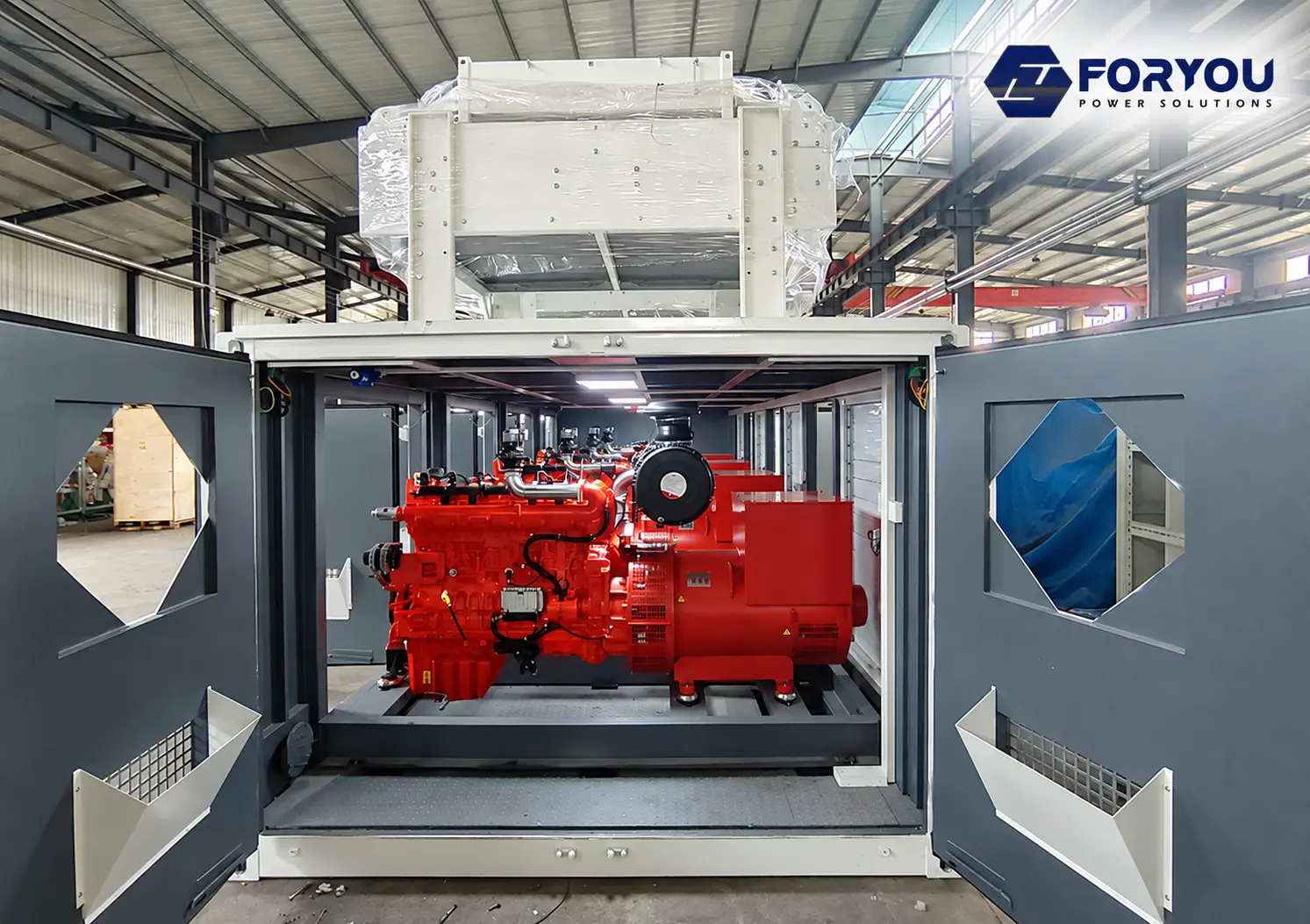
3. Engineered Container Layout for Accessibility and Safety
Oilfield power stations must be designed not only for electrical output, but also for safe operation, cooling performance, service accessibility, and long-term maintenance.
FORYOU has prepared several container arrangement concepts to accommodate different project requirements.
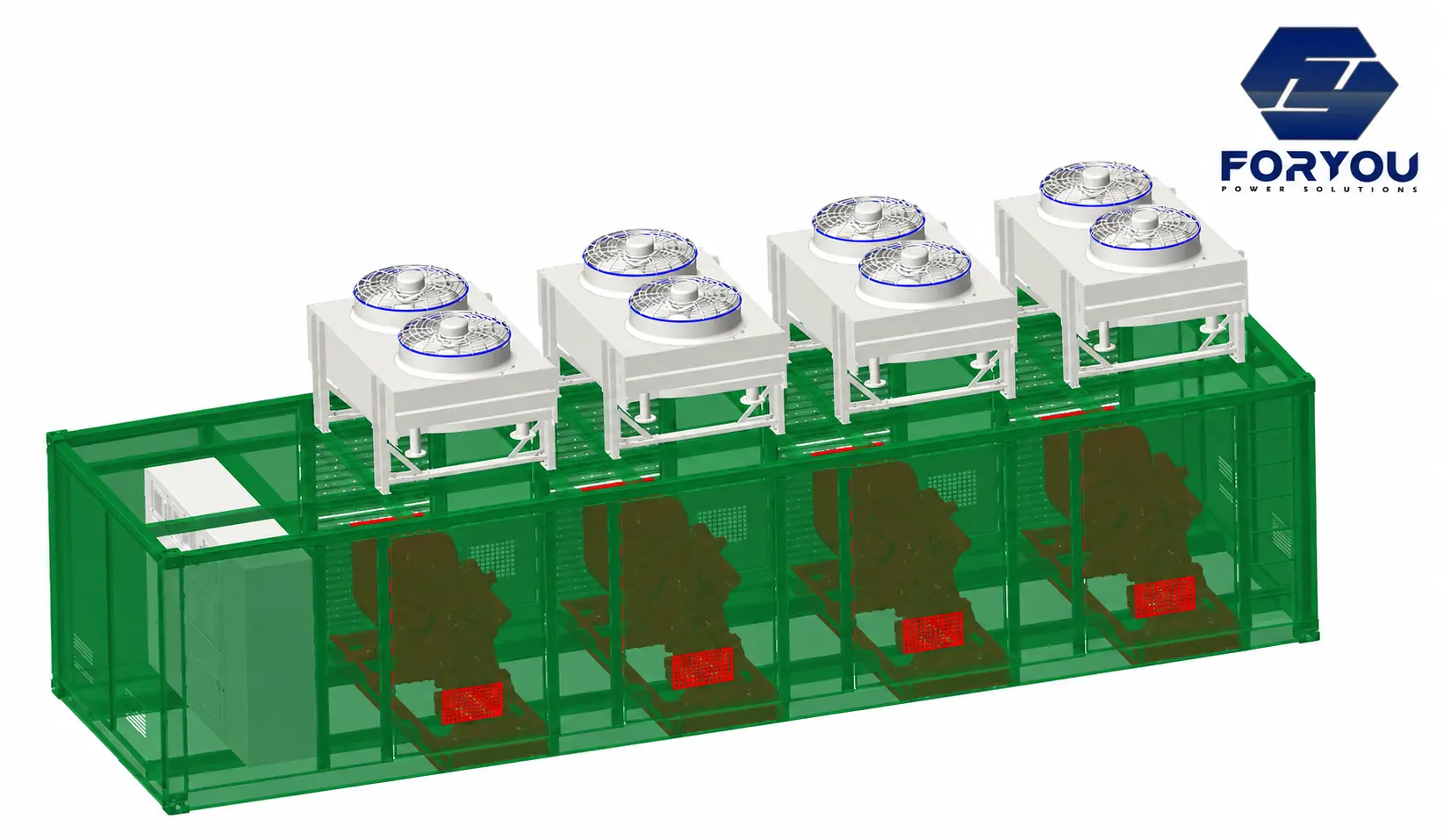
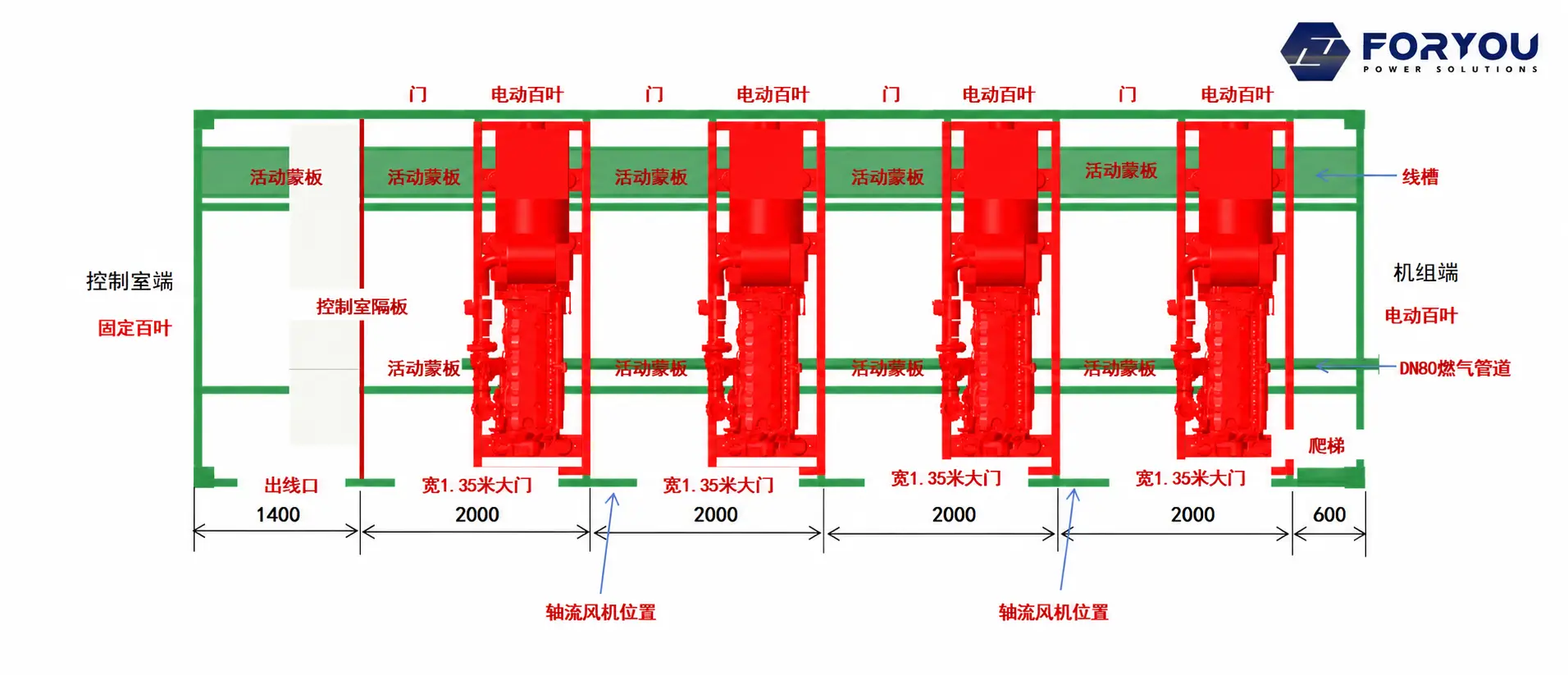
The proposed container designs incorporate the gas generator sets, control equipment, ventilation arrangements, gas piping, cable routing, maintenance access doors, and associated auxiliary systems.
Container Design Considerations
The detailed engineering includes:
Equipment Arrangement: Four gas generator sets arranged to maintain practical service access.
Ventilation: Air intake, louvers, and ventilation equipment designed to support engine-room operating conditions.
Cooling: Dedicated cooling arrangements with radiator assemblies positioned to dissipate engine heat.
Gas Distribution: Engine gas piping, pressure-control components, and necessary safety valves.
Electrical Routing: Organized cable pathways and connection points for power and control systems.
Maintenance Access: Doors and access areas to facilitate equipment inspection, repair, and replacement.
The final container arrangement must be approved based on the selected equipment, ventilation calculations, maintenance clearances, and local safety requirements.
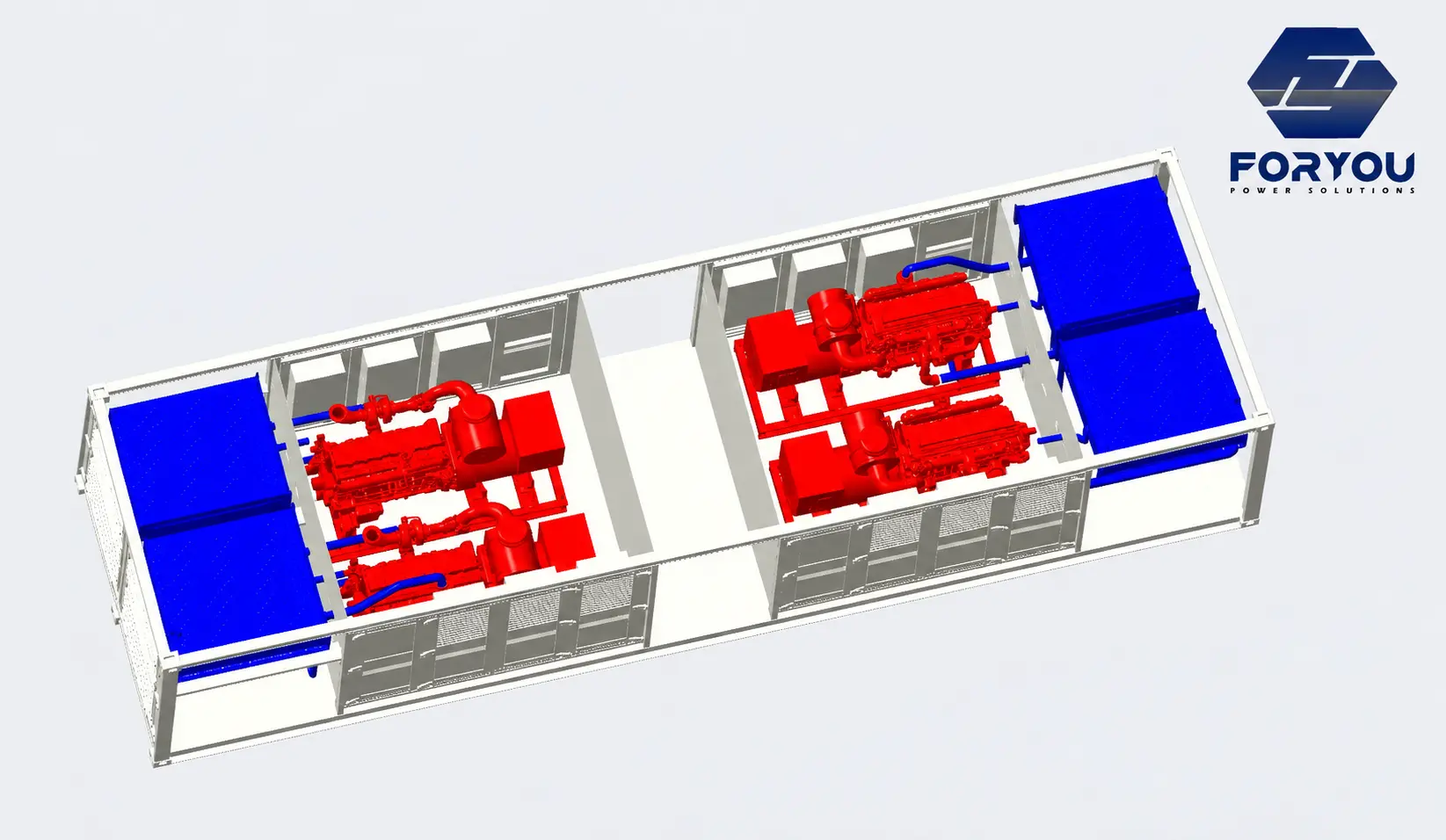
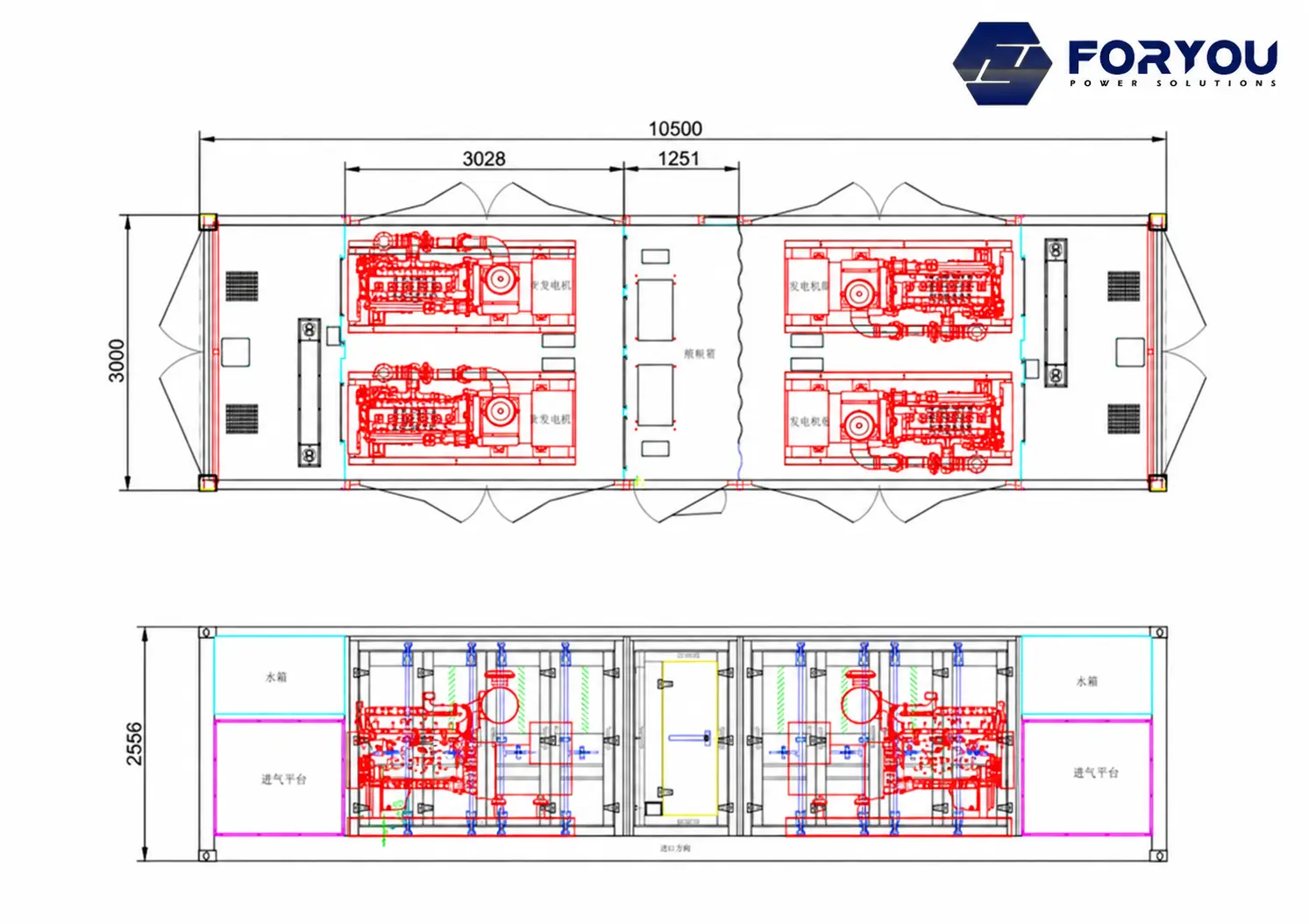
Alternative Container Arrangement
Another proposed engineering layout positions the generator sets at opposite ends of the container, with the control equipment located toward the center.
This arrangement offers an alternative approach to equipment accessibility and internal cable routing.
The project drawings demonstrate FORYOU's ability to evaluate different mechanical layouts before manufacturing and installation.
4. Intelligent Power Management with DEIF AGC 150
Reliable power generation requires more than high-quality engines.
For multi-generator applications, the control system plays an important role in maintaining stable power output, managing generator synchronization, and protecting critical equipment.
The proposed system uses the DEIF AGC 150 generator controller as part of its generator control and power management architecture.
Automatic Generator Operation
The AGC 150 supports automatic starting and stopping sequences and can be incorporated into load-dependent power management strategies.
Depending on the final configuration, additional generator sets can be started or stopped in response to changing electrical demand.
Synchronization and Load Sharing
The controller supports generator synchronization and load-sharing functions.
This is particularly valuable for multi-generator power plants where several engines are required to operate together on a common electrical system.
Engine and Generator Protection
The available protection functions include monitoring and response to abnormal operating conditions such as:
-
Low engine oil pressure
-
High coolant temperature
-
Engine overspeed
-
Generator overvoltage or undervoltage
-
Overfrequency or underfrequency
-
Overcurrent and electrical overload
-
Generator starting failure
Protection settings, alarm handling, and shutdown logic must be configured during system engineering and commissioning.
Remote Monitoring and Communication
With supported communication interfaces, including RS-485 and Ethernet, the AGC 150 can be integrated into a suitable remote monitoring or supervisory control system.
This provides the technical foundation for remote status monitoring, alarm visibility, and operational supervision.
For remote oilfield applications, these functions can help maintenance teams identify abnormal conditions more efficiently and improve response procedures.
Remote operation depends on the completed communication infrastructure, access controls, and site-approved operating procedures.
5. Cooling and Auxiliary Systems for Oilfield Power Generation
Thermal management is essential in industrial generator installations.
During prolonged operation, natural gas engines produce substantial heat that must be removed to maintain acceptable engine and enclosure temperatures.
The FORYOU proposal uses water-cooled engines with radiator assemblies installed on the container structure.
Integrated Supporting Equipment
The proposed generator package includes the following principal subsystems:
| System | Main Function |
|---|---|
| Cooling system | Engine heat rejection |
| Exhaust system | Exhaust gas discharge and noise attenuation |
| Gas valve assembly | Gas pressure regulation and fuel isolation |
| Starting batteries | Engine starting power |
| Generator control system | Monitoring, protection and synchronization |
| Container enclosure | Equipment protection and integration |
| Maintenance accessories | Routine maintenance support |
For installations in Kazakhstan and Russia, special consideration should also be given to low-temperature starting, coolant freeze protection, engine preheating, ventilation arrangements, and gas supply conditions.
These cold-weather requirements must be evaluated according to the actual site design temperature.
6. Factory Assembly and Engineering Integration
Before a containerized gas generator module is prepared for delivery, mechanical and electrical integration must be completed according to the approved design.
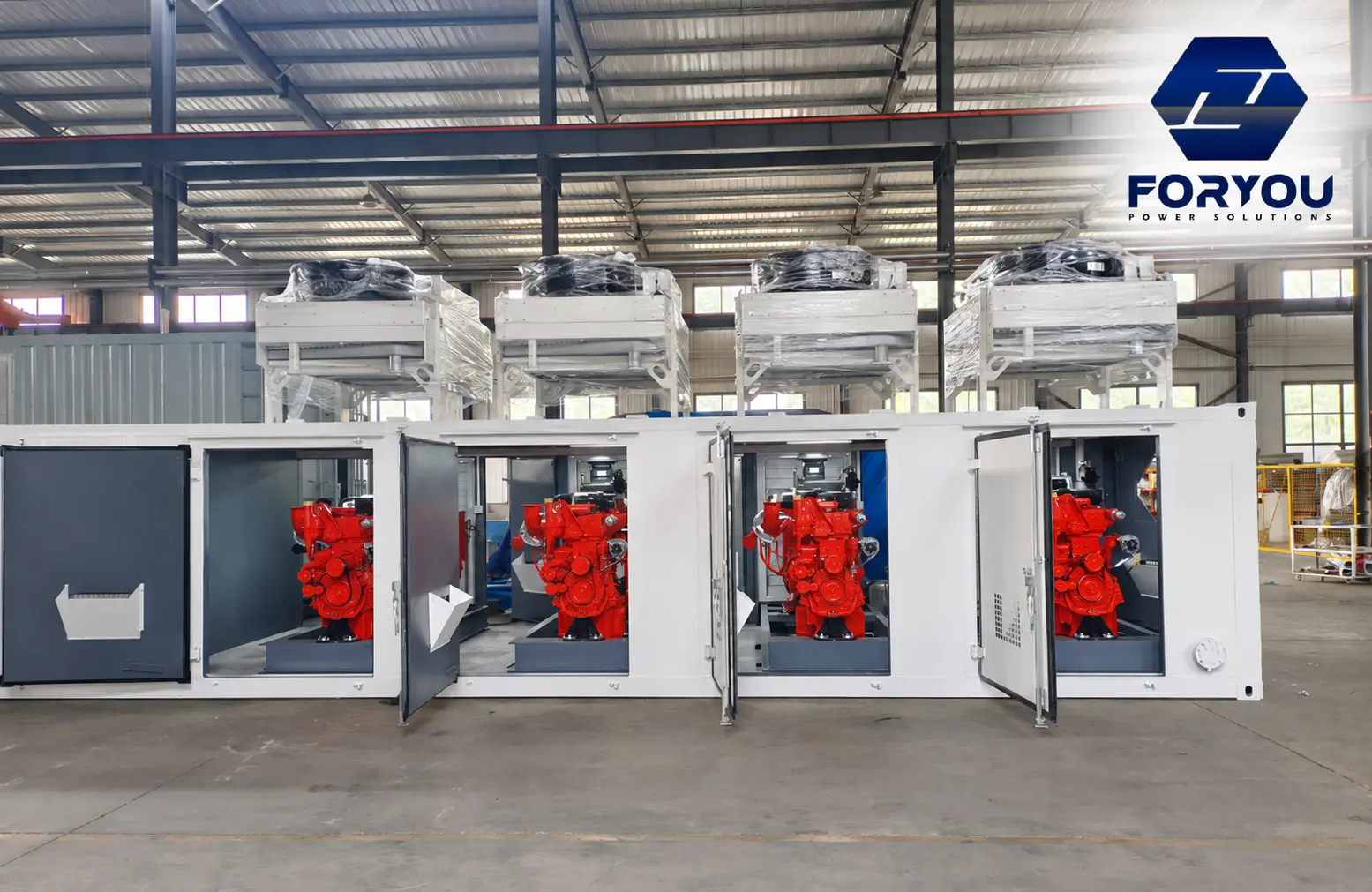
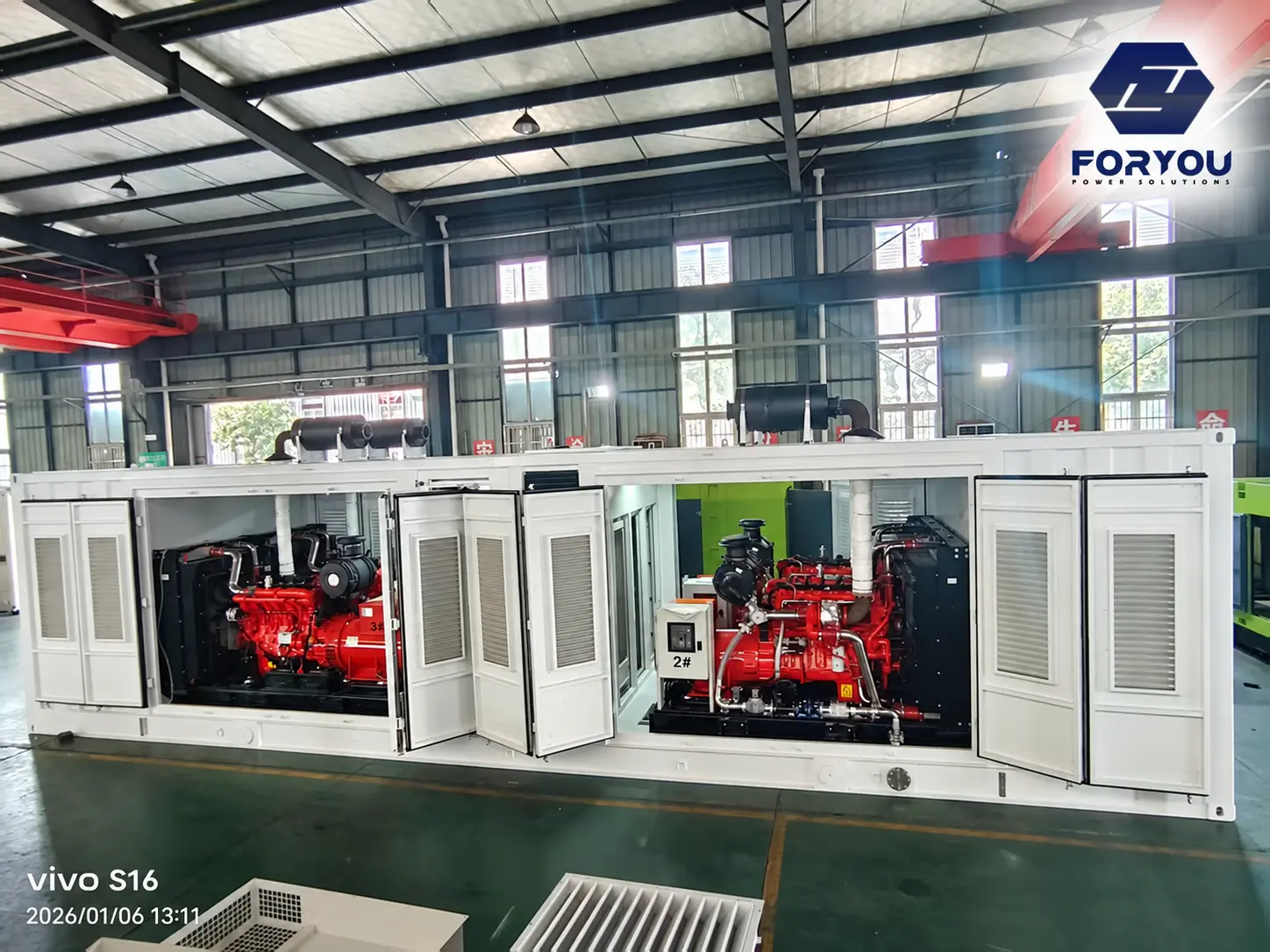
The project photographs illustrate the assembly of multiple Cummins gas engines within FORYOU generator enclosures.
Factory integration activities may include mechanical positioning, cooling connections, exhaust routing, electrical cabling, installation of protective equipment, and controller configuration.
Factory Quality and Inspection
A project-specific inspection and testing program should cover mechanical assembly, electrical connections, safety systems, control functions, and applicable generator operating tests.
Synchronization and load-sharing performance should be verified under an agreed factory or site acceptance test procedure.
These processes are important for reducing installation risks and identifying technical issues before commercial operation.
7. Natural Gas Supply Requirements and Site Preparation
The performance of a natural gas power plant depends heavily on fuel quality and supply stability.
A properly designed oilfield gas power system must account for gas heating value, methane content, gas pressure, moisture, contaminants, and available fuel flow.
The FORYOU technical proposal identifies key fuel-quality requirements and specifies that the natural gas must be appropriately treated before entering the engines.
Important Engineering Checks
Before final equipment selection, the project team should confirm:
-
Natural gas composition and lower heating value
-
Methane number and suitability for the selected engine
-
Fuel pressure at the generator gas inlet
-
Available gas flow across the operating load range
-
Moisture, particulate and hydrogen sulfide levels
-
Ambient temperature, altitude, and site environmental conditions
-
Electrical load profile and starting requirements
-
Distribution voltage and integration with existing power systems
Where the available fuel is associated petroleum gas, additional gas analysis and treatment evaluation may be necessary. Compatibility with untreated associated gas should not be assumed.
Final engine output, gas consumption, gas treatment requirements, and operating reliability must be assessed against the actual site data.
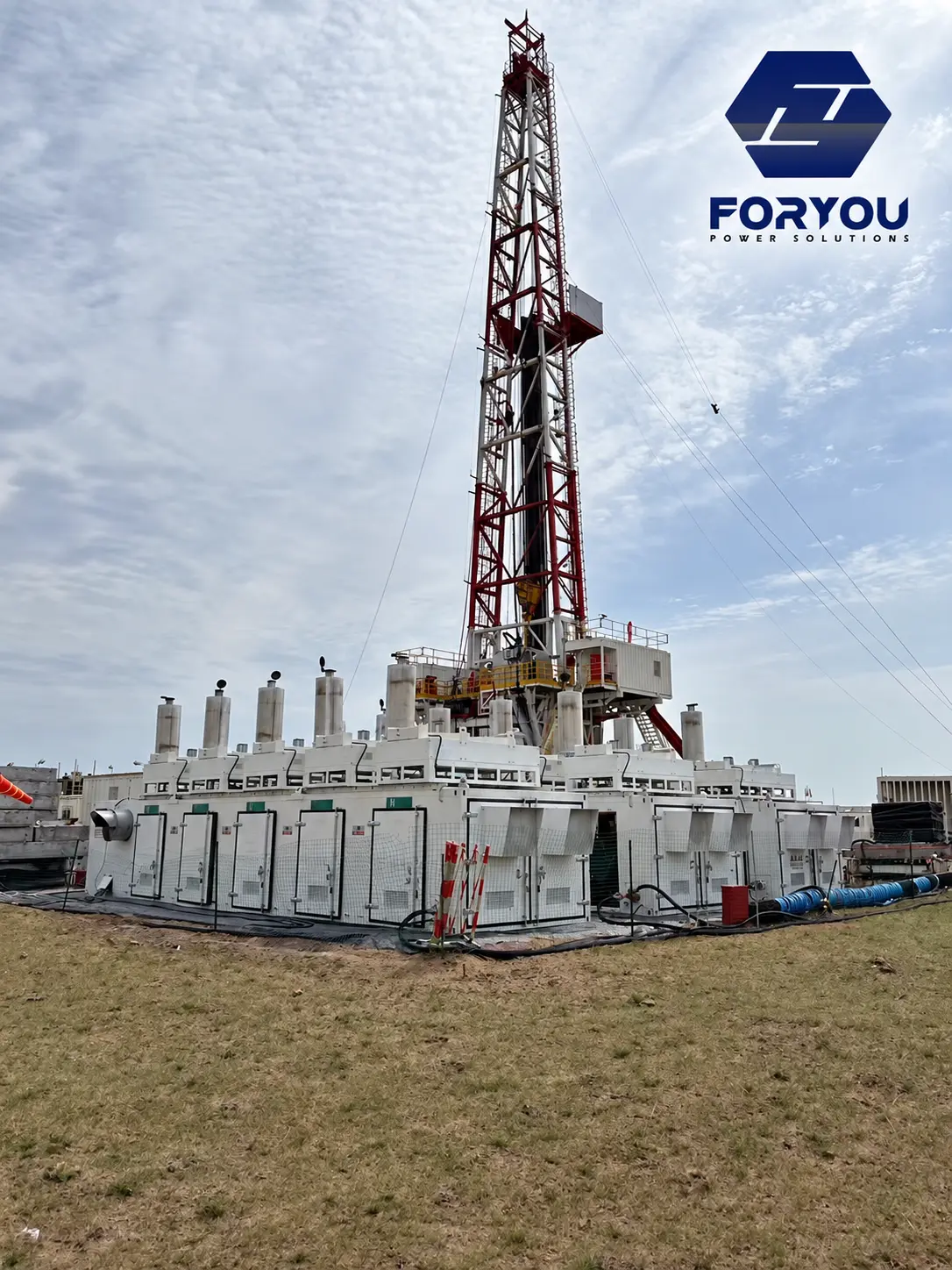
8. Oil & Gas Project Applications in Kazakhstan and Russia
Containerized natural gas power generation offers a practical engineering solution for a range of oil and gas facilities.
Typical applications include:
-
Remote oil drilling and production facilities
-
Oilfield pumping stations
-
Natural gas processing facilities
-
Oil and gas gathering stations
-
Industrial camps and auxiliary buildings
-
Remote industrial microgrids
-
Independent power generation at isolated sites
The main advantage of containerized power systems is the ability to integrate generation equipment into transportable and serviceable modules.
For regions with limited grid access, properly engineered gas power stations can provide an important source of on-site electricity.
9. Why Choose FORYOU Power for Containerized Gas Power Projects?
Large industrial power projects require more than a standard generator purchase.
They require a coordinated solution covering generating equipment, container integration, control architecture, fuel compatibility, and project-specific installation requirements.
FOR YOU Power focuses on providing customized generator and power-generation solutions for industrial customers.
Our engineering approach emphasizes:
Project-Oriented Design
Generator configurations are developed around the customer's electrical demand, site environment, and operating conditions.
Customized Container Integration
Engine packages, auxiliary systems, and control equipment can be arranged according to the approved project requirements.
Intelligent Control Integration
Generator controllers and synchronization systems can be incorporated into multi-generator power solutions.
Technical Documentation
Project documentation can include equipment specifications, engineering layouts, system configurations, and defined technical requirements.
Installation and Commissioning Support
Technical support, installation supervision, commissioning, and operator training can be arranged according to the agreed project scope.
10. Frequently Asked Questions
How many generators are included in a 3.6MW gas power plant?
This project configuration uses three containerized 1,200kW power modules. Each module contains four Cummins natural gas generator sets, giving a total of twelve engine-generator units.
Can containerized natural gas generators operate in parallel?
Yes. Compatible generator sets can be configured for parallel operation using an appropriate synchronization and power management system. The design must include suitable switchgear, protection settings, load-sharing controls, and commissioning procedures.
Can the system be used in cold regions such as Kazakhstan and Russia?
Containerized gas generator systems can be engineered for cold-climate operation. However, low-temperature starting systems, coolant protection, enclosure design, gas conditioning, and equipment ratings must be verified for the specific installation.
Can natural gas power systems operate continuously?
Natural gas generator systems can be designed for continuous-duty applications, subject to their approved operating ratings, fuel quality, cooling capacity, maintenance schedule, and overall plant configuration.
Can the power plant be expanded in the future?
A modular system can support expansion when the electrical distribution system, synchronization equipment, fuel supply, and site infrastructure are designed with adequate capacity.
Conclusion: A Modular Approach to Oilfield Power Generation
The 3.6MW containerized natural gas power plant illustrates a flexible engineering approach to power generation for oil and gas operations.
By combining three 1,200kW power modules, twelve Cummins natural gas engines, and DEIF AGC 150 control technology, the proposed system provides a scalable platform for industrial power applications.
For oilfield operators and EPC contractors in Kazakhstan, Russia, and other international markets, a properly engineered containerized gas power plant can help address the challenges of remote electricity generation, equipment accessibility, and changing power demand.
Looking for a Customized Natural Gas Power Solution?
Fujian FORYOU Power Tech Co., Ltd. provides engineering-based power solutions for industrial and oil and gas applications.
Whether your project requires a 1.2MW containerized gas generator, a 3.6MW modular power station, or a customized multi-megawatt gas power system, our team can review your application requirements.
Contact FORYOU Power with your required capacity, site conditions, gas composition, and electrical load profile to discuss a suitable technical solution.
Contact: info@foryougen.com
FOR YOU POWER — POWER SOLUTIONS FOR INDUSTRIAL APPLICATIONS.
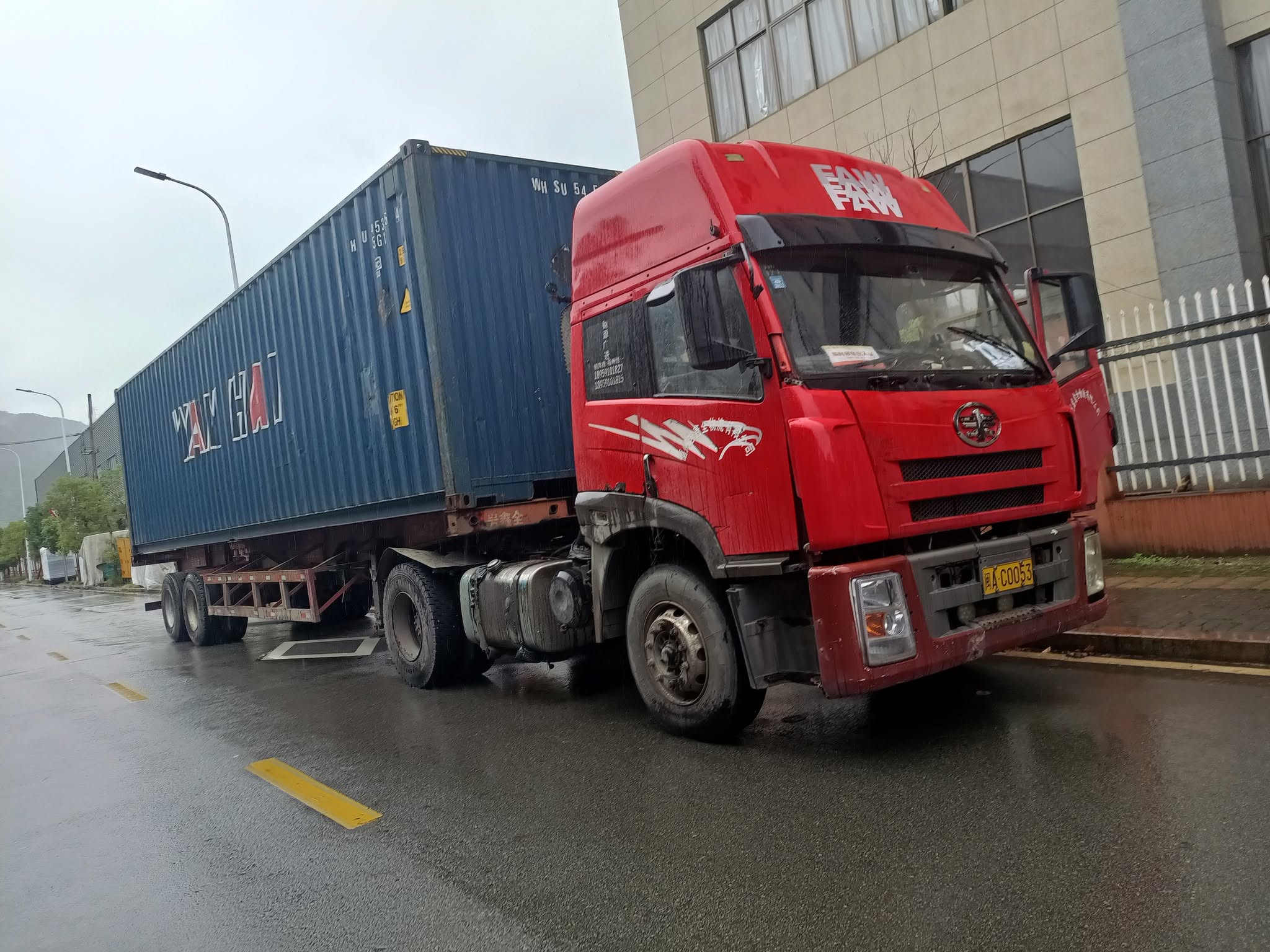
Generator Set Export Shipment: Secure Packaging and Container Loading at FORYOU POWER
Silent Diesel Generator Solutions for Coffee Shops and Restaurants