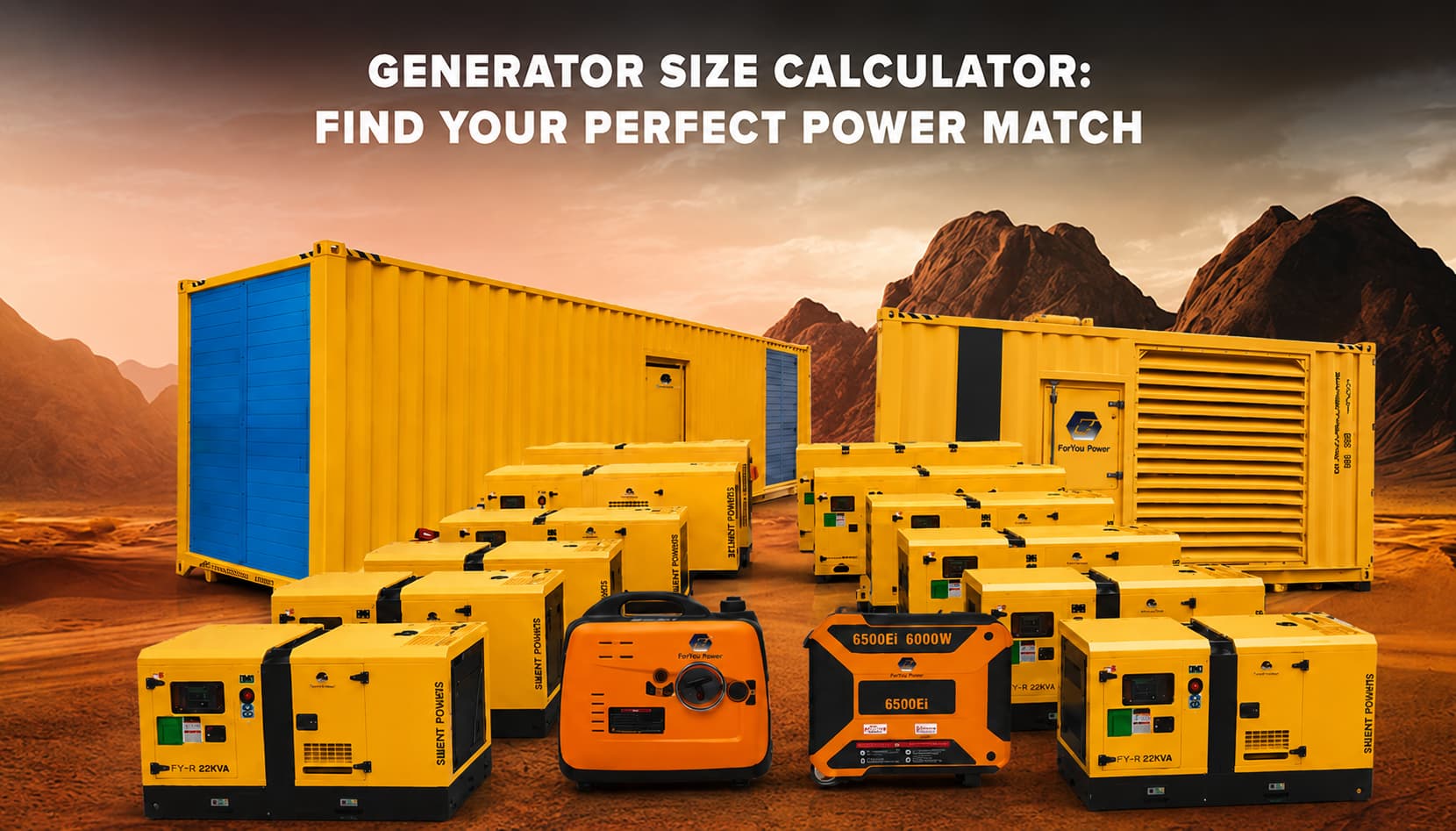
Generator Size Calculator: Find Your Perfect Power Match
Choosing the correct generator size is one of the most important decisions when purchasing a diesel generator.
A generator that is too small may overload, causing voltage drops, equipment damage, and unexpected shutdowns. On the other hand, an oversized generator can increase fuel consumption, maintenance costs, and overall investment.
This guide explains how to calculate generator capacity and select the right generator for your application.
Whether you need backup power for a home, construction site, commercial building, or industrial facility, proper generator sizing ensures reliable performance and long-term efficiency.
Why Generator Sizing Matters
Generator sizing directly impacts:
-
Equipment reliability
-
Fuel efficiency
-
Engine lifespan
-
Voltage stability
-
Operating costs
-
Future expansion capability
An incorrectly sized generator can result in:
Undersized Generator Problems
-
Frequent overload trips
-
Voltage fluctuations
-
Equipment damage
-
Reduced generator lifespan
Oversized Generator Problems
-
Higher fuel consumption
-
Increased maintenance costs
-
Wet stacking in diesel engines
-
Poor operating efficiency
Proper sizing helps maximize performance while minimizing long-term costs.
Understanding kW and kVA
Generator capacity is usually expressed in:
Kilowatts (kW)
Represents the actual power consumed by equipment.
Kilovolt-Amperes (kVA)
Represents the apparent power supplied by the generator.
The relationship is:
kW = kVA × Power Factor
Most diesel generators use:
Power Factor = 0.8
Example:
100 kVA × 0.8 = 80 kW
Understanding this relationship is essential when comparing generator specifications.
Generator Size Calculator Formula
Use the following steps to estimate your generator size.
Step 1: List All Equipment
Create a list of equipment that will operate simultaneously.
Examples:
-
Air conditioners
-
Pumps
-
Compressors
-
Lighting
-
Computers
-
Machinery
-
Welding equipment
Step 2: Calculate Total Running Load
Add the total running wattage of all equipment.
Example:
| Equipment | Running Watts |
|---|---|
| Air Conditioner | 3,000W |
| Lighting | 1,000W |
| Water Pump | 2,000W |
| Office Equipment | 2,000W |
| Total | 8,000W |
Step 3: Add Starting Load
Some equipment requires additional power during startup.
Examples:
-
Motors
-
Compressors
-
Pumps
-
Air conditioning systems
Add the highest startup load to your total demand.
Step 4: Add Safety Margin
Always include an additional:
15% – 25%
to accommodate future expansion and load fluctuations.
Step 5: Convert to kVA
Formula:
kVA = Watts ÷ 1000 ÷ Power Factor
Example:
10,000W ÷ 1000 ÷ 0.8
= 12.5 kVA
Recommended generator size:
15–20 kVA
Recommended Generator Sizes by Application
Residential Homes
| Application | Recommended Size |
|---|---|
| Essential Loads | 5–10 kVA |
| Small House | 10–20 kVA |
| Medium House | 20–30 kVA |
| Whole House Backup | 30–50 kVA |
Commercial Buildings
| Application | Recommended Size |
|---|---|
| Small Office | 20–50 kVA |
| Retail Store | 30–100 kVA |
| Office Building | 100–300 kVA |
| Hotel | 300–800 kVA |
Construction Sites
| Application | Recommended Size |
|---|---|
| Small Site | 20–50 kVA |
| Medium Site | 50–200 kVA |
| High-Rise Project | 200–500 kVA |
| Infrastructure Project | 500–1000 kVA |
Industrial Facilities
| Application | Recommended Size |
|---|---|
| Small Factory | 100–300 kVA |
| Manufacturing Plant | 300–1000 kVA |
| Heavy Industry | 1000–2500 kVA |
Diesel Generator Sizing Considerations
When selecting a diesel generator, consider:
Load Type
Resistive Loads
-
Lighting
-
Heaters
Inductive Loads
-
Motors
-
Pumps
-
Compressors
Inductive loads require higher startup power.
Future Expansion
Choose a generator that allows for future growth without requiring immediate replacement.
Operating Environment
Environmental factors such as:
-
High temperatures
-
High altitude
-
Dust
-
Humidity
can affect generator performance and sizing requirements.
Continuous vs Standby Operation
Standby generators require different sizing considerations than continuous-duty generators.
Always match the generator rating to the intended application.
Why Choose FORYOU POWER?
FORYOU POWER is a professional diesel generator manufacturer and exporter based in China.
We provide generator solutions from:
20kVA – 2500kVA
for:
-
Construction Sites
-
Industrial Facilities
-
Commercial Buildings
-
Data Centers
-
Hospitals
-
Mining Projects
-
Emergency Backup Systems
Our generators are powered by world-renowned engines including:
-
Cummins
-
Perkins
-
Baudouin
-
MTU
-
Weichai
and are available in:
-
Silent Type
-
Open Type
-
Trailer Mounted
-
Containerized Power Stations
Our engineering team can help calculate the ideal generator size for your specific project requirements.
Frequently Asked Questions
What Happens If My Generator Is Too Small?
An undersized generator may overload, causing shutdowns, voltage instability, and equipment damage.
Can I Use a Larger Generator Than Required?
Yes, but excessive oversizing can reduce fuel efficiency and increase operating costs.
What Is the Most Common Generator Size?
Popular commercial generator sizes include:
-
50kVA
-
100kVA
-
200kVA
-
500kVA
The correct size depends entirely on your application and load profile.
Conclusion
Choosing the right generator size is critical for ensuring reliable power, fuel efficiency, and long-term performance.
By understanding your load requirements, startup demands, and future expansion plans, you can select a generator that delivers dependable power without unnecessary operating costs.
At FORYOU POWER, we help customers worldwide find the ideal generator solution for residential, commercial, industrial, and construction applications.
Need Help Selecting the Right Generator Size?
📧 info@foryougen.com
FORYOU POWER – Reliable Power for Global Projects.
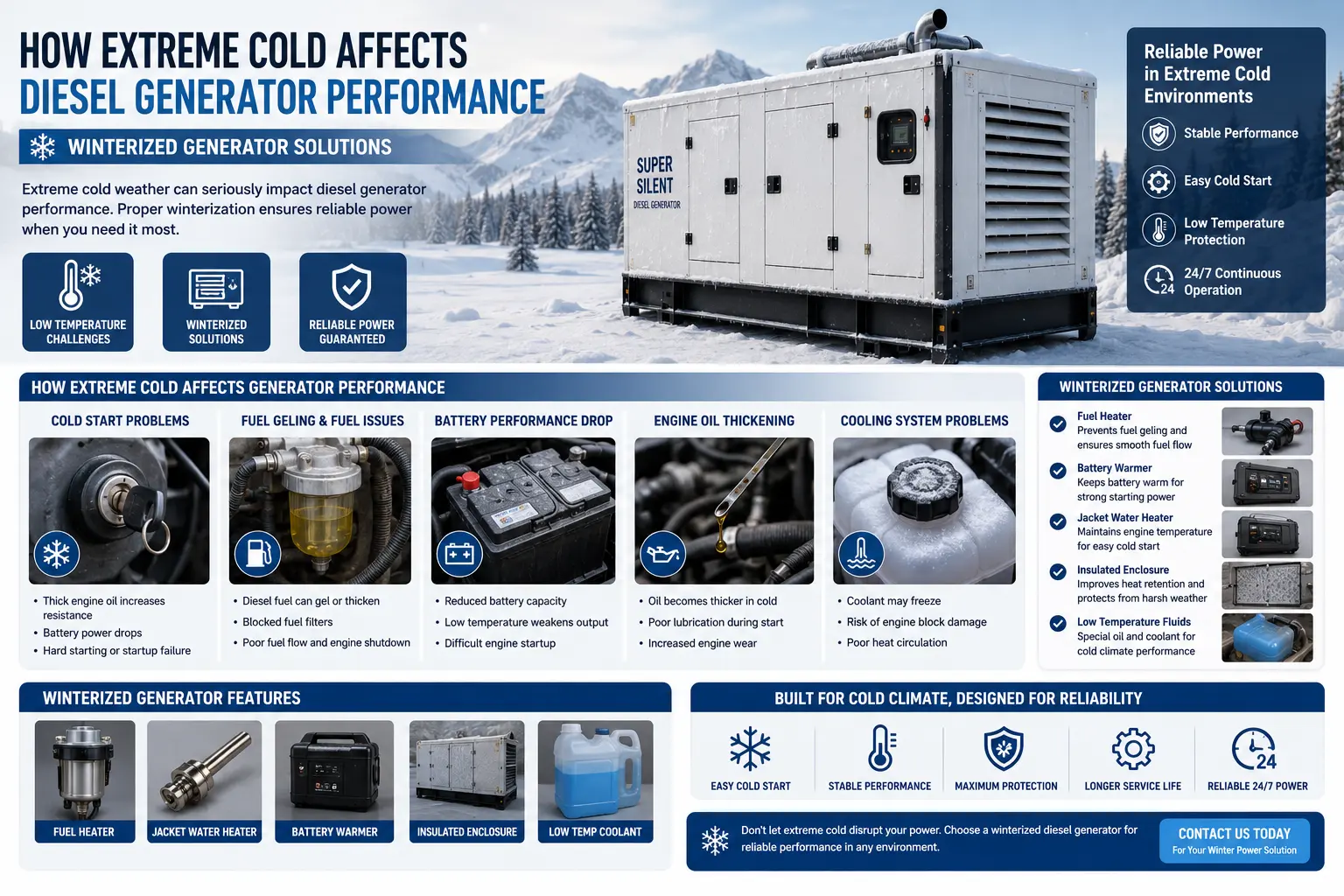
How Extreme Cold Affects Diesel Generator Performance